Ad

Ad

Progress for group 0 ad
Partner Content
Addis Ababa, Ethiopia
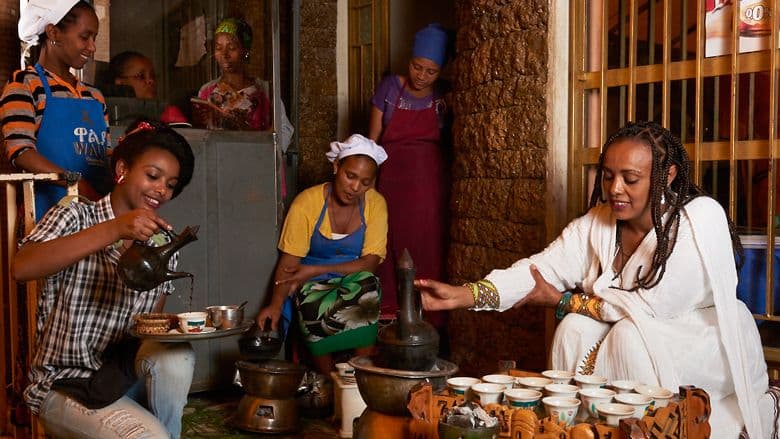
Selam, mentioned by only her first name, is a small business owner that runs her operations from a makeshift plastic shop on the streets of Addis Ababa. In her late 20s, she works from Sunday to Sunday with a budget of 10,000 birr. Serving an average of 20 customers a day, Selam gets to take home only 200 birr by the end of the night.
Though the business is not the most ideal, she gets up every day to her job, as the business provides a livelihood for her and her sister. She is sure that an additional 100,000 birr can help her expand her business and earn more money. But for her, the idea of getting that amount of money is a far-fetched concept, and applying for a bank loan never crosses her mind.
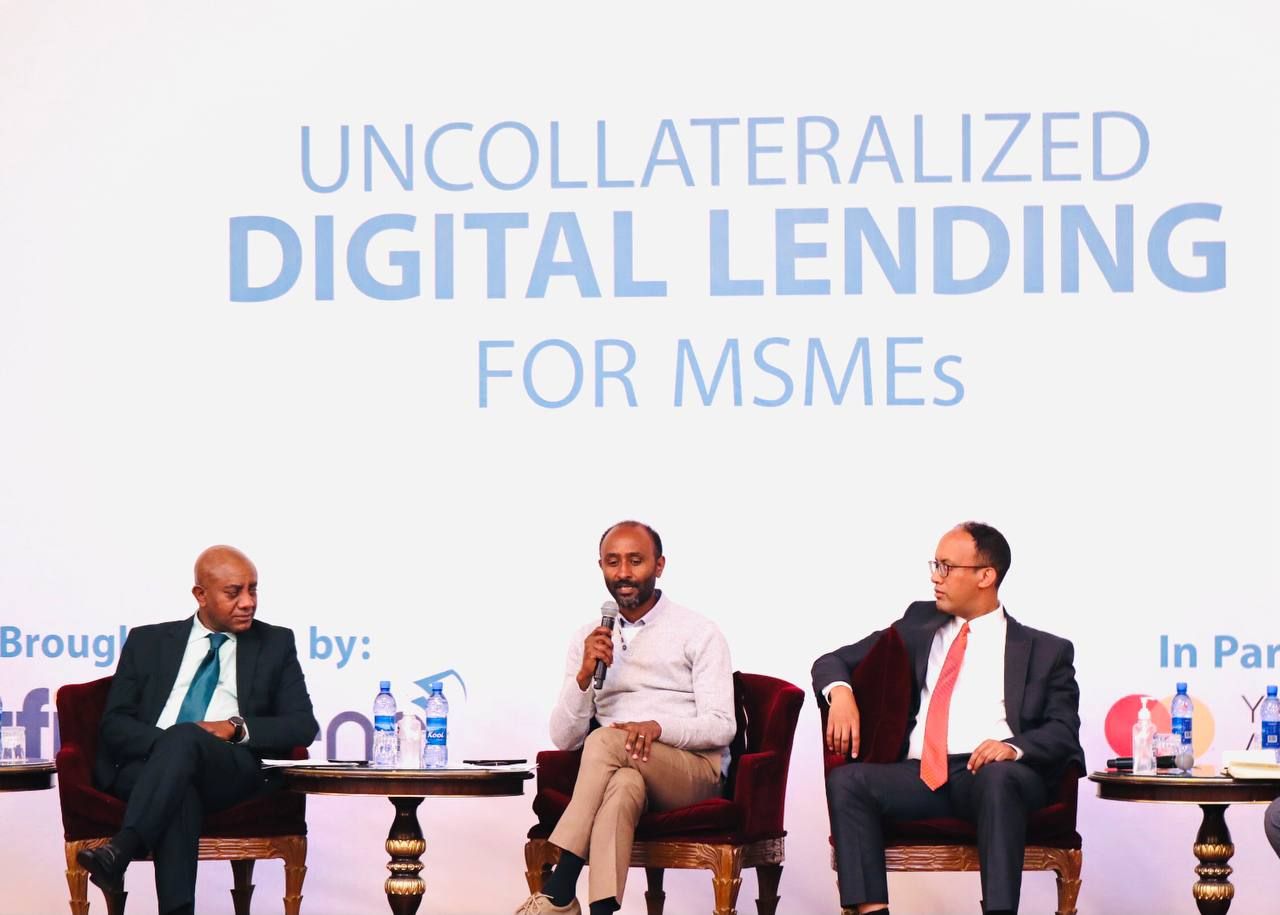
The story of Selam, a reality shared by many Ethiopian entrepreneurs, was the opening speech at an event held two months ago where representatives from 18 banks, policymakers, and Micro, Small, and medium businesses (MSMEs) came together to discuss how to make capital more accessible to entrepreneurs through Qena, Ethiopia’s first and unique approach to the challenge.
Hosted by Kifiya Financial Technology Plc, a homegrown technology firm, in partnership with MasterCard Foundation and International Finance Cooperation (IFC), the program presented the digital lending technology that opens doors for MSMEs to access capital through an uncollateralized loan.
Qena, an AI-driven platform developed by Kifiya, enables banks to offer lending solutions to MSMEs through a credit scoring system that unlocks new markets to financial institutions while helping the roots of the Ethiopian economy, MSMEs, grow.
Why MSMEs?
Recent figures show that Ethiopia is home to an estimated 800,000 MSMEs and before the COVID-19 Pandemic, these businesses employed 5 million people generating billions of birr in monthly revenue.
“We are only small and medium-sized businesses in the eyes of banks. The many lives of Ethiopians are dependent on the products and services of MSMEs and we fulfill their daily lives and needs,” said Thomas Bekele, owner of John Bag, a leather goods-producing enterprise and a representative of MSMEs at the event.
Scattered through Ethiopia, MSMEs cover diverse geographic and economic areas providing opportunities for disadvantaged groups such as unskilled workers, young people, and women, holding a key role in inclusive development.
Despite their important role, MSMEs face various institutionalized hurdles delaying or denying their growth, with access to credit being one of the major ones.
According to a World Bank Report, access to finance has consistently remained one of the top constraints for businesses in Ethiopia, where enterprises surveyed identified that as the major constraint to their development, far ahead of any other constraint.
Another study by Enterprise Partners (EP) a former market system development programme in Ethiopia, has found that out of the 800,000 MSMEs in Ethiopia, only about 130,000 have access to credit. The study further estimated the total financing gap to be around $4.2 billion. While various factors drive the gap, the main reason small business owners are unable to access finance from banks is that they don’t have a property that they can collateralize.
“It feels as if everybody trusts us except for banks,” Thomas added.
Old Problems
Ethiopian banks use a traditional rule called the five C’s of credit to assess loan requests.
These five C’s of credit are used to convey the creditworthiness of potential borrowers. The five C’s asses borrowers’ character, capacity– the amount of revenue the applicant gets, capital– the amount of money an applicant has, condition– the purpose of the loan, the amount involved, and prevailing interest rates, and finally, collateral—an asset that can back or act as security for the loan.
Invented around a century ago, these principles are still relevant to this day and despite MSMEs’ smaller loan needs, Ethiopian banks have failed to accommodate small businesses due to their collateral requirements.
“It’s because of such reasons that in a country with a population of 113 million, there are only around 260,000 active loans in the country while 80 pc of them are returning borrowers,” said Munir Duri, CEO of Kifiya Financial Technologies Plc.
Modern Solutions
Financial lenders worldwide have adopted credit scoring mechanisms to determine the creditworthiness of a person or a small business. While Credit scoring also assesses the other rules of the five C’s of credit, it mainly bypasses the need for collateral to issue loans.
Applying qualitative and quantitative analysis, credit scoring estimates the risk associated with granting a loan using data provided in the loan application and data obtained from other sources, profiling a borrower’s ability to repay their loans.
The calculations being based on factors such as payment records, frequency of payments, amount of debts, credit charge-offs, and the number of credit cards held; the data points for credit scoring are easy to come in the developed countries.
But in a country like Ethiopia, where data is scarce, coming up with credit scoring models holds a unique challenge, and it’s what Kifiya has been working for the past years to solve using technology.
Local Takes
Kifiya’s AI-enabled credit scoring system, Qena, designed for the Ethiopian context, utilizes alternative data to power its algorithms.
Qena finds answers to the lenders’ ultimate questions of ability and willingness to pay through enterprise information, such as the number of employees, sales, business registration details, historical business data together with psychometric tests.
The few structured data that exists in Ethiopia, air time purchase and utility bill payment history, are also taken into account by Qena in setting credit scores. Its psychometric tests dwell into the psyche of a loan requester, assessing their character.
Banks can use Qena to launch uncollateralized digital lending services for MSMEs, making the application process available via web-based and app-based platforms. Bypassing the old traditions, Qena eliminates the human factor and ensures objectivity, reduces risk, speeds up the credit process, and unlocks vast markets.
Taking into consideration around 300 data points, the current accuracy rate of Qena is between 85 to 87pc.
Out of the 800,000 MSMEs in Ethiopia, only about 130,000 have access to credit, and the total financing gap is around $4.2 billion.
Taste Run
At the beginning of this year, Cooperative Bank of Oromia partnered with Kifiya to launch an uncollateralized digital lending product called Michu. Powered by Qena, Michu is the first loan product by an Ethiopian bank that doesn’t require collateral.
“As part of a trial test, we randomly selected individuals that have previously taken small loans from COOP and run them through Qena. The platform had an accuracy rate of 100pc in identifying who played their loan and who defaulted,” said Munir.
Moreover, Qena grows with usage. As the AI is used to give out loans, the transaction data that comes from it, such as the time and frequency of loan payment, as well as information from those who default, are data points for Qena, which it learns from.
Hartnell Ndungi, Chief data officer at Absa bank Kenya, who has overseen the development of many AI-enabled uncollateralized digital lending platforms across Africa, urges Ethiopian banks to deploy the system and experiment with it.
“In uncollateralized digital lending, the goal is to go from no data to limited data and then is to full resourc
Share this post:
Partner Content
At Shega, we do more than tell stories. We help you make an impact. Our platforms, data, and expertise connect brands, organizations, and investors to the audiences and insights that matter.
Reach, engage, and grow with us.
Get in Touch
How to Think about Financial Inclusion in Ethiopia?
17 April 2024
Visa at the Doorsteps of Ethiopia’s Payment Ecosystem
06 September 2023
Latest Stories
22 December 2025
𝗗𝗲𝘀𝗶𝗴𝗻𝗲𝗱 𝗳𝗼𝗿 𝗪𝗵𝗼𝗺? 𝗧𝗵𝗲 𝗠𝗶𝗿𝗮𝗴𝗲 𝗼𝗳 𝗪𝗼𝗺𝗲𝗻-𝗖𝗲𝗻𝘁𝗿𝗶𝗰 𝗗𝗶𝗴𝗶𝘁𝗮𝗹 𝗙𝗶𝗻𝗮𝗻𝗰𝗲 𝗶𝗻 𝗘𝘁𝗵𝗶𝗼𝗽𝗶𝗮 QA
By Chilen14 December 2025
From Campus Idea to Satellite TV: Ethiopia Gets Its First Home Shopping Channel QA test
By ChilenLatest Stories
𝗗𝗲𝘀𝗶𝗴𝗻𝗲𝗱 𝗳𝗼𝗿 𝗪𝗵𝗼𝗺? 𝗧𝗵𝗲 𝗠𝗶𝗿𝗮𝗴𝗲 𝗼𝗳 𝗪𝗼𝗺𝗲𝗻-𝗖𝗲𝗻𝘁𝗿𝗶𝗰 𝗗𝗶𝗴𝗶𝘁𝗮𝗹 𝗙𝗶𝗻𝗮𝗻𝗰𝗲 𝗶𝗻 𝗘𝘁𝗵𝗶𝗼𝗽𝗶𝗮 QA
22 December 2025
From Campus Idea to Satellite TV: Ethiopia Gets Its First Home Shopping Channel QA test
14 December 2025

𝗗𝗮𝘁𝗮 𝗦𝗼𝘃𝗲𝗿𝗲𝗶𝗴𝗻𝘁𝘆, 𝗧𝗲𝗰𝗵-𝗦𝗮𝘃𝘃𝘆 𝗖𝗶𝘃𝗶𝗹 𝗦𝗲𝗿𝘃𝗮𝗻𝘁𝘀 & 𝟭 𝗺𝗶𝗹𝗹𝗶𝗼𝗻 𝗜𝗧 𝗷𝗼𝗯𝘀: 𝗨𝗻𝗽𝗮𝗰𝗸𝗶𝗻𝗴 𝗘𝘁𝗵𝗶𝗼𝗽𝗶𝗮’𝘀 𝟮𝟬𝟯𝟬 𝗗𝗶𝗴𝗶𝘁𝗮𝗹 𝗥𝗼𝗮𝗱𝗺𝗮𝗽 on Qa strapi
11 December 2025
How to Think about Financial Inclusion in Ethiopia?
17 April 2024
Visa at the Doorsteps of Ethiopia’s Payment Ecosystem
06 September 2023