Ad
Ad

Progress for group 0 ad
Kaleab Girma
Addis Ababa, Ethiopia
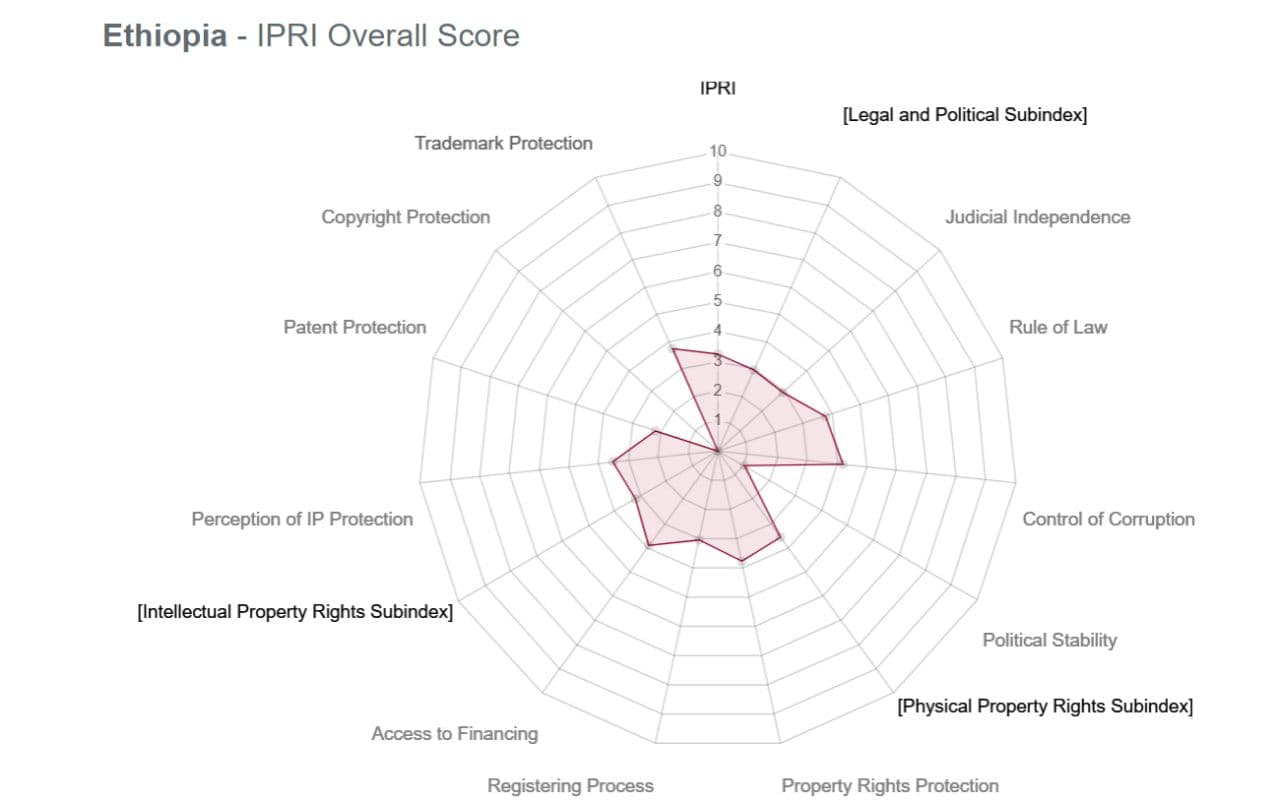
The International Property Rights Index (IPRI), a global publication that measures the strength of property rights systems in different countries around the world, has ranked Ethiopia 119 out of 125 countries it measured, painting a concerning picture of Ethiopia’s business environment.
The annual index by the Property Rights Alliance, which highlights the role property rights play in creating a prosperous economy and just society, is entirely dedicated to the measurement of intellectual and physical property rights.
This year’s report, released at the end of September 2023, also examines the relationship between property rights and other economic and social indicators of well-being, including gender equality, energy, innovation, and competition.
“Robust legal and political frameworks for property rights not only protect the intangible and tangible assets of inventors but also incentivize creators to produce goods that are better and safer than before,” states the Alliance.
In this year’s index, Ethiopia scored 3.244 out of a possible 10 points, ranking 24 out of 30 in Africa. According to the IPRI report, one of the most significant challenges to business operations in Ethiopia is the country’s regulatory environment. Navigating the various licensing and approval processes can be time-consuming and frustrating for businesses, often leading to delays and increased costs.
Another major challenge, the report states, is the lack of transparency and predictability in the legal system. The IPRI report notes the weakness of Ethiopia’s legal and political subindex, with a score of 2.987 out of 10, indicating a lack of effective legal protection for property rights and business interests.
However, Ethiopia’s lowest score on the index is attributed to political instability, positioning it above only two other countries among the 125 nations assessed in the report.
This week, Reuters reported that equipment leasing company Ethio Lease, Ethiopia’s only foreign-owned firm to obtain a financial services license from the central bank, said it was closing down operations, stating a 2021 amendment to a directive applicable to the business made it impossible for the company to write new leases.
Share this post:
Kaleab Girma
At Shega, we do more than tell stories. We help you make an impact. Our platforms, data, and expertise connect brands, organizations, and investors to the audiences and insights that matter.
Reach, engage, and grow with us.
Get in Touch
Ahun 2022 Calling for Applications on QA envit 2nd time
24 November 2024

ECMA Opens Door to Capital Market Innovation with Launch of Sandbox1
24 November 2024

Governor Mamo Shakes up Incentives for Artisanal Gold Miners
28 August 2024

Ethiopian Coding Initiative Surpasses 100K Students
23 August 2024
Latest Stories
22 December 2025
𝗗𝗲𝘀𝗶𝗴𝗻𝗲𝗱 𝗳𝗼𝗿 𝗪𝗵𝗼𝗺? 𝗧𝗵𝗲 𝗠𝗶𝗿𝗮𝗴𝗲 𝗼𝗳 𝗪𝗼𝗺𝗲𝗻-𝗖𝗲𝗻𝘁𝗿𝗶𝗰 𝗗𝗶𝗴𝗶𝘁𝗮𝗹 𝗙𝗶𝗻𝗮𝗻𝗰𝗲 𝗶𝗻 𝗘𝘁𝗵𝗶𝗼𝗽𝗶𝗮 QA
By Chilen14 December 2025
From Campus Idea to Satellite TV: Ethiopia Gets Its First Home Shopping Channel QA test
By ChilenLatest Stories
𝗗𝗲𝘀𝗶𝗴𝗻𝗲𝗱 𝗳𝗼𝗿 𝗪𝗵𝗼𝗺? 𝗧𝗵𝗲 𝗠𝗶𝗿𝗮𝗴𝗲 𝗼𝗳 𝗪𝗼𝗺𝗲𝗻-𝗖𝗲𝗻𝘁𝗿𝗶𝗰 𝗗𝗶𝗴𝗶𝘁𝗮𝗹 𝗙𝗶𝗻𝗮𝗻𝗰𝗲 𝗶𝗻 𝗘𝘁𝗵𝗶𝗼𝗽𝗶𝗮 QA
22 December 2025
From Campus Idea to Satellite TV: Ethiopia Gets Its First Home Shopping Channel QA test
14 December 2025

𝗗𝗮𝘁𝗮 𝗦𝗼𝘃𝗲𝗿𝗲𝗶𝗴𝗻𝘁𝘆, 𝗧𝗲𝗰𝗵-𝗦𝗮𝘃𝘃𝘆 𝗖𝗶𝘃𝗶𝗹 𝗦𝗲𝗿𝘃𝗮𝗻𝘁𝘀 & 𝟭 𝗺𝗶𝗹𝗹𝗶𝗼𝗻 𝗜𝗧 𝗷𝗼𝗯𝘀: 𝗨𝗻𝗽𝗮𝗰𝗸𝗶𝗻𝗴 𝗘𝘁𝗵𝗶𝗼𝗽𝗶𝗮’𝘀 𝟮𝟬𝟯𝟬 𝗗𝗶𝗴𝗶𝘁𝗮𝗹 𝗥𝗼𝗮𝗱𝗺𝗮𝗽 on Qa strapi
11 December 2025
Ahun 2022 Calling for Applications on QA envit 2nd time
24 November 2024
ECMA Opens Door to Capital Market Innovation with Launch of Sandbox1
24 November 2024
Governor Mamo Shakes up Incentives for Artisanal Gold Miners
28 August 2024
Ethiopian Coding Initiative Surpasses 100K Students
23 August 2024