Ad

Ad

Progress for group 0 ad

Team Shega
Addis Ababa, Ethiopia
In keeping pace with the series of structural overhauls to Ethiopia’s central banking procedures over the past month, the National Bank of Ethiopia (NBE) has once more revised its gold purchasing modality.
While the most recent ‘golden’ reform two months back entailed raising the premiums paid for gold suppliers to rates as high as 67% from prices in international markets, the latest directive seeks to offer alluring incentives for artisanal miners.
This, a fourth amendment to the gold purchasing strategy of the central bank in the past three years signals aspirations to revive the dwindling export figures.
Large-scale gold exporters are granted a threefold longer duration to utilize their forex earnings in contrast to other commodity exporters who are required to expend it in a month. One element of the foreign exchange regime overhaul introduced last month is the allowance for exporters to use half of their FX earnings for their personal use, albeit in a month-long window. Mandatory retention by the central bank is expected to drop to zero in the long term according to the economic reform program as part of incentivizing exports.
Ethiopia’s gold exports have taken a massive hit over the past two years after hitting a record high of around 546 million dollars in 2022 only to drop by close to a fifth the following year.
NBE’s aspirations for a sustainable increase in the country’s foreign exchange reserves include a significant uptake in mineral export earnings.
Small-scale communal miners will be paid an immediate payment equivalent to 95% of the value upon delivery to the buying center, they will be allowed to pick their preferred price from the forthcoming 30 days.
Signed off by NBE governor Mamo Mihretu, the directive also promises special incentives for individual suppliers who can manage to bring in between 250 gm and 25 kilograms to help them cover their costs. It also extends further incentives for aggregate suppliers who can manage to pull together above 25 Kilograms from individual producers.
One of the most commonly cited attractions for the burgeoning of the contraband gold trade in Ethiopia was the quickly expanding difference between prices offered on parallel and official exchange rates. Following the government’s decision to float the Ethiopian birr four weeks back, incentives to trade in parallel markets are expected to decline due to the nearly equivalent currency values.
Share this post:
Team Shega
At Shega, we do more than tell stories. We help you make an impact. Our platforms, data, and expertise connect brands, organizations, and investors to the audiences and insights that matter.
Reach, engage, and grow with us.
Get in Touch
Ahun 2022 Calling for Applications on QA envit 2nd time
24 November 2024

ECMA Opens Door to Capital Market Innovation with Launch of Sandbox1
24 November 2024

Ethiopian Coding Initiative Surpasses 100K Students
23 August 2024
Latest Stories
22 December 2025
𝗗𝗲𝘀𝗶𝗴𝗻𝗲𝗱 𝗳𝗼𝗿 𝗪𝗵𝗼𝗺? 𝗧𝗵𝗲 𝗠𝗶𝗿𝗮𝗴𝗲 𝗼𝗳 𝗪𝗼𝗺𝗲𝗻-𝗖𝗲𝗻𝘁𝗿𝗶𝗰 𝗗𝗶𝗴𝗶𝘁𝗮𝗹 𝗙𝗶𝗻𝗮𝗻𝗰𝗲 𝗶𝗻 𝗘𝘁𝗵𝗶𝗼𝗽𝗶𝗮 QA
By Chilen14 December 2025
From Campus Idea to Satellite TV: Ethiopia Gets Its First Home Shopping Channel QA test
By ChilenLatest Stories
𝗗𝗲𝘀𝗶𝗴𝗻𝗲𝗱 𝗳𝗼𝗿 𝗪𝗵𝗼𝗺? 𝗧𝗵𝗲 𝗠𝗶𝗿𝗮𝗴𝗲 𝗼𝗳 𝗪𝗼𝗺𝗲𝗻-𝗖𝗲𝗻𝘁𝗿𝗶𝗰 𝗗𝗶𝗴𝗶𝘁𝗮𝗹 𝗙𝗶𝗻𝗮𝗻𝗰𝗲 𝗶𝗻 𝗘𝘁𝗵𝗶𝗼𝗽𝗶𝗮 QA
22 December 2025

From Campus Idea to Satellite TV: Ethiopia Gets Its First Home Shopping Channel QA test
14 December 2025

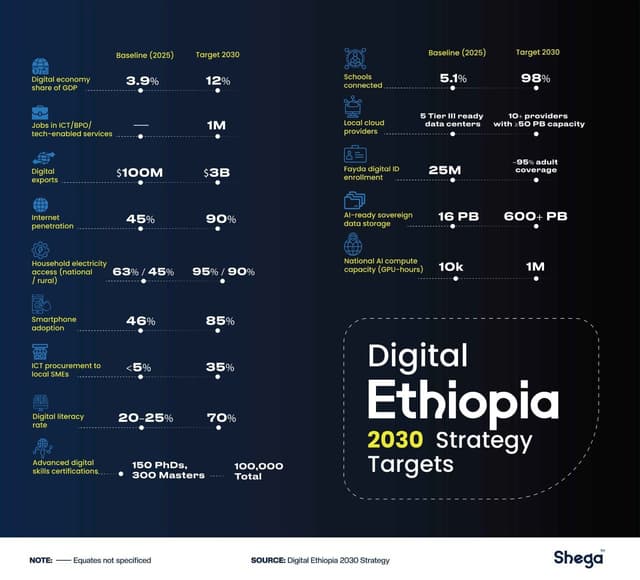
𝗗𝗮𝘁𝗮 𝗦𝗼𝘃𝗲𝗿𝗲𝗶𝗴𝗻𝘁𝘆, 𝗧𝗲𝗰𝗵-𝗦𝗮𝘃𝘃𝘆 𝗖𝗶𝘃𝗶𝗹 𝗦𝗲𝗿𝘃𝗮𝗻𝘁𝘀 & 𝟭 𝗺𝗶𝗹𝗹𝗶𝗼𝗻 𝗜𝗧 𝗷𝗼𝗯𝘀: 𝗨𝗻𝗽𝗮𝗰𝗸𝗶𝗻𝗴 𝗘𝘁𝗵𝗶𝗼𝗽𝗶𝗮’𝘀 𝟮𝟬𝟯𝟬 𝗗𝗶𝗴𝗶𝘁𝗮𝗹 𝗥𝗼𝗮𝗱𝗺𝗮𝗽 on Qa strapi
11 December 2025
Ahun 2022 Calling for Applications on QA envit 2nd time
24 November 2024
ECMA Opens Door to Capital Market Innovation with Launch of Sandbox1
24 November 2024
Ethiopian Coding Initiative Surpasses 100K Students
23 August 2024