Ad

Ad

Progress for group 0 ad
Tewodros Tassew
Addis Ababa, Ethiopia
NBE has issued the long-awaited directive that will regulate payment instruments issuers which includes mobile money, wallet and similar digital financial services in Ethiopia.
The new directive titled “Licensing and Authorization of Payment Instrument Issuer Directive No. ONPS/01/2020″ is poised to replace the previous Mobile and agent banking directive that paved the way for the likes of M-Birr, HelloCash, CBE-Birr, Amole, and other mobile money services to flourish.
The 2012 directive had allowed banks and microfinance to provide mobile money service via agents. With that, customers were able to sign up at an agent or branch location and be able to transact up to 6,000 birr daily and have a maximum account balance of 25,000 birr. In addition, Banks and MFIs were allowed to partner with technology service providers through either software acquisition or revenue sharing arrangements.
What’s new?
The new directive is a game changer when compared to the former as it paves way for the creation of a new type of financial service providers beyond the usual banks and microfinance. It introduces Fintech’s or also referred to by the national bank of Ethiopia as “Digital financial service providers” or DFS providers in short.
This arrangement is taken from other countries’ experiences such as Nigeria where financial technology companies (Fintech) are licensed by the regulator to provide a limited range of financial services.
This move is partly attributed to the low performance of banks and microfinance in delivering their promise of financial inclusion and eased digital payments using mobile. Our internal research shows, Banks and microfinance in Ethiopia have rolled out a total of 18 mobile money services via partnerships with fin-techs or directly acquiring the technology and rolling out on their own.
So far, Banks and MFI’s are not able to succeed as the likes of M-Pesa did in Kenya. All mobile money platforms in Ethiopia acquired a total of around 8 million customers to date, around 20,000 agents. Their set of services are also limited to sending money and a handful of payments. However, one could argue it will not be fair to compare the success of a telecom led mobile money like Mpesa against banks led mode mobile money platforms and point that both are operating in a different context.
Anyhow, these numbers are considered quite low for a country with a population of over 100 million people and 45 million mobile phone subscribers. The results are further dimmed down when we start analyzing beyond registered customers and focus on the number of active monthly users.
Some of the key reason for this low performance of Fintech sector includes bank-led mobile money model which was adopted by the national bank, the regulatory obstacles for service providers, the low level of attention of the banks and Mfi’s for digital financial services and the limited capacity of service providers. The contextual limitation on the market side when it comes to digital, financial literacy and telecom coverage can be considered as well.
It seems the national bank has also understood the impact of its decision in choosing a bank-led model back in 2012 when it issued the mobile and agent banking directive. As a result, it has been forced to evaluate its policy and accommodate a hybrid model that allows not only banks and MFI’s but also fintech companies to be a service provider for mobile money and other digital payment instruments.
The Directive has also introduced the tiered KYC concept, whereby customers would have 3 levels of account type based on the level of Know your customer (KYC) procedure they go through. Accordingly, a customer with level 1 account will be able to register through referral by other customer and not required physically visit a bank branch or agent as it was in the past and is able to hold up to 5,000 Birr and transact up to 1,000 birr daily while Level 2 and Level 3 customers are required to present a valid ID card and transact up to 5,000 and 8,000 daily and can have a balance of up to 20,000 and 30,000 birr respectively.
Another small but very critical change also includes the acceptance of electronic receipts as a mode of transaction confirmation which removes the past requirement of providing paper-based receipts for cash in and cash-out transactions.
This directive can be both an opportunity and a barrier for potential service providers who are looking to deliver digital financial services. Let’s have a look at the potential winners and losers.
The Losers
The banks and micro-finances are on the loser’s bench in this directive, whereby they now have to compete not only with each other but with the much more innovative and fast-moving fintech companies in the digital financial services front.
In addition to losing their exclusive right as a service provider, banks and MFI’s may actually lose customers and money from their conventional banking services as their market share is posed to be eroded by new types of
Share this post:
Tewodros Tassew
At Shega, we do more than tell stories. We help you make an impact. Our platforms, data, and expertise connect brands, organizations, and investors to the audiences and insights that matter.
Reach, engage, and grow with us.
Get in Touch
How to Think about Financial Inclusion in Ethiopia?
17 April 2024
Visa at the Doorsteps of Ethiopia’s Payment Ecosystem
06 September 2023
Latest Stories
22 December 2025
𝗗𝗲𝘀𝗶𝗴𝗻𝗲𝗱 𝗳𝗼𝗿 𝗪𝗵𝗼𝗺? 𝗧𝗵𝗲 𝗠𝗶𝗿𝗮𝗴𝗲 𝗼𝗳 𝗪𝗼𝗺𝗲𝗻-𝗖𝗲𝗻𝘁𝗿𝗶𝗰 𝗗𝗶𝗴𝗶𝘁𝗮𝗹 𝗙𝗶𝗻𝗮𝗻𝗰𝗲 𝗶𝗻 𝗘𝘁𝗵𝗶𝗼𝗽𝗶𝗮 QA
By Chilen14 December 2025
From Campus Idea to Satellite TV: Ethiopia Gets Its First Home Shopping Channel QA test
By ChilenLatest Stories
𝗗𝗲𝘀𝗶𝗴𝗻𝗲𝗱 𝗳𝗼𝗿 𝗪𝗵𝗼𝗺? 𝗧𝗵𝗲 𝗠𝗶𝗿𝗮𝗴𝗲 𝗼𝗳 𝗪𝗼𝗺𝗲𝗻-𝗖𝗲𝗻𝘁𝗿𝗶𝗰 𝗗𝗶𝗴𝗶𝘁𝗮𝗹 𝗙𝗶𝗻𝗮𝗻𝗰𝗲 𝗶𝗻 𝗘𝘁𝗵𝗶𝗼𝗽𝗶𝗮 QA
22 December 2025
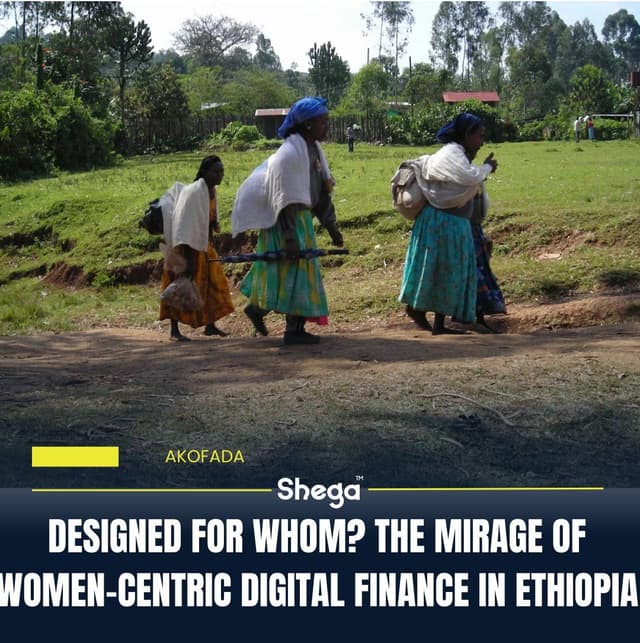
From Campus Idea to Satellite TV: Ethiopia Gets Its First Home Shopping Channel QA test
14 December 2025

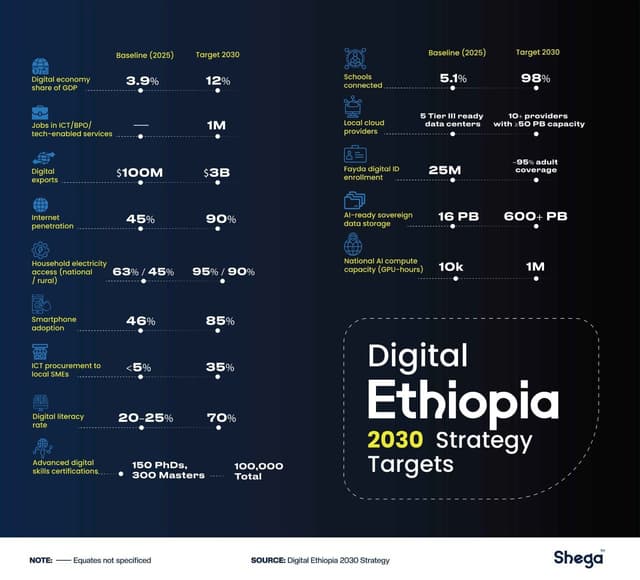
𝗗𝗮𝘁𝗮 𝗦𝗼𝘃𝗲𝗿𝗲𝗶𝗴𝗻𝘁𝘆, 𝗧𝗲𝗰𝗵-𝗦𝗮𝘃𝘃𝘆 𝗖𝗶𝘃𝗶𝗹 𝗦𝗲𝗿𝘃𝗮𝗻𝘁𝘀 & 𝟭 𝗺𝗶𝗹𝗹𝗶𝗼𝗻 𝗜𝗧 𝗷𝗼𝗯𝘀: 𝗨𝗻𝗽𝗮𝗰𝗸𝗶𝗻𝗴 𝗘𝘁𝗵𝗶𝗼𝗽𝗶𝗮’𝘀 𝟮𝟬𝟯𝟬 𝗗𝗶𝗴𝗶𝘁𝗮𝗹 𝗥𝗼𝗮𝗱𝗺𝗮𝗽 on Qa strapi
11 December 2025
How to Think about Financial Inclusion in Ethiopia?
17 April 2024
Visa at the Doorsteps of Ethiopia’s Payment Ecosystem
06 September 2023