Ad

Ad

Progress for group 0 ad
Daniel Metaferiya(updated)
Addis Ababa, Ethiopia
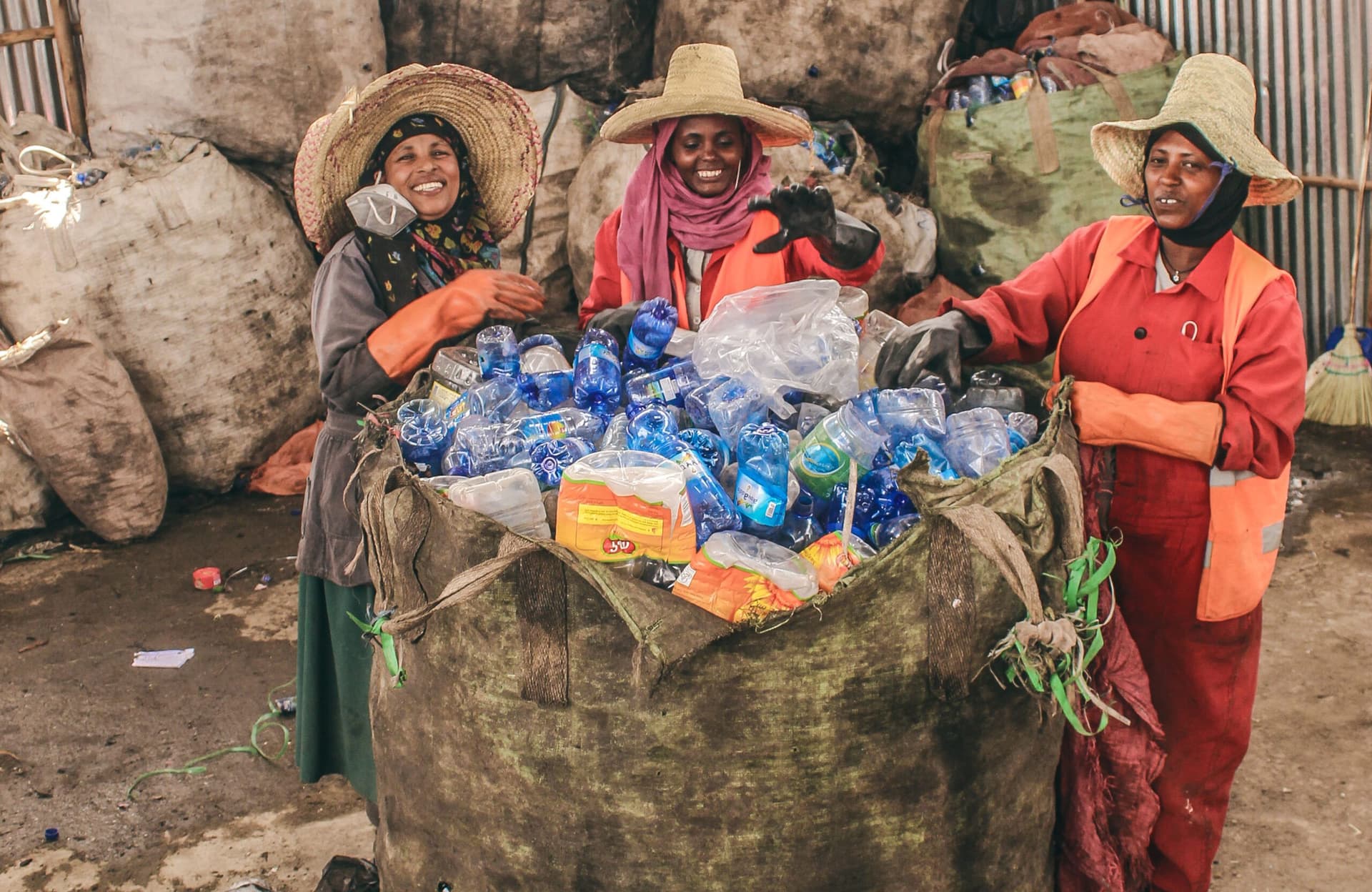
Founded by a group of friends, Sintayew and Balcha Compost Manufacturing is a company engaged in collecting waste materials in the capital. Now operating on a 5000-square-meter space on the outskirts of Addis Ababa, both business and life has not been easy for the friends who once lived on the streets.
“We collect a variety of waste materials for composting, including metals, plastic bottles, and bones.” Said Ashenafi Dula, co-founder and manager of Sintayew and Balcha Compost Manufacturing,
“We start our days early, carrying empty bags and hoping to fill them with compostable materials as we traverse the city,” he says. “In my view, there’s no such thing as absolute waste. However, traditional waste collection methods are inefficient, and the income it generates is insufficient.”
Ashenafi and his friends’ lives changed when the government agency Bio & Emerging Technology Institute, formerly the Ethiopian Biotechnology Institute, contacted them. The institute offered training to five members of their 15-member union, including Ashenafi.
Ashenafi explained to Shega that the training covered waste management for over a year. They learned how to produce fertilizer and compost, add value to waste materials, and sell them for reuse. He added that the institute covered the training costs and provided them with a stipend to support themselves while collecting waste.
Currently, the Company operates on a plot of land in Sebeta, Sheger City. In the past six months, they have processed over 50,000 kg of waste materials, producing over 28,000 kg of compost fertilizer.
The waste they collect breaks down as 60% organic, 15% recyclables, and 25% other materials (including wood, bone, textiles, metals, and glass).
Animal waste, which predominantly includes manure and other compostable materials, is piled together in 7-meter by 1-meter heaps. Each pile holds about 1,800 kg of material.
He explains that they begin mixing the materials after three days. They then check the temperature and moisture levels weekly. Excessive heat can cause fires, while too much moisture reduces efficiency.
The team mixes the compost manually, inserting their hands up to 20 cm deep to assess moisture and temperature. Ashenafi says they’ve memorized the ideal temperature and judge moisture content by squeezing the material. If liquid drips from their palms, the pile needs more heat.
Ashenafi believes organic compost is far superior to synthetic fertilizers. He has dedicated a portion of their workspace to a farm, where they grow vegetables like onions, tomatoes, and potatoes using their own compost.
“Public attitudes towards waste need improvement,” Ashenafi says. “Waste separation within households is crucial. While we process animal waste and organic materials, we sell recyclable plastics to dedicated recyclers.”
Addis Ababa’s waste generation is on the rise. According to GIZ, it has increased from 9,700 tons per day in 2015 to 12,200 tons per day in 2020 and is projected to double by 2030.
Waste collection in the city is improving, but challenges remain. The primary system relies on Micro and Small Enterprises (MSEs) for door-to-door household collection. A secondary system, managed by private companies, collects waste from hotels, hospitals, schools, and other institutions. Finally, the city conducts street sweeping.
Despite these efforts, about 25% of waste is still dumped illegally, this is according to a 2022 paper titled An overview of solid waste management systems in the city administration of Addis Ababa: past to present. The remaining 65% is collected but disposed of in an unhygienic manner at the Repi/Koshe landfill. Currently, 95% of collected waste comes from the MSE door-to-door system, with the remainder handled by private companies.
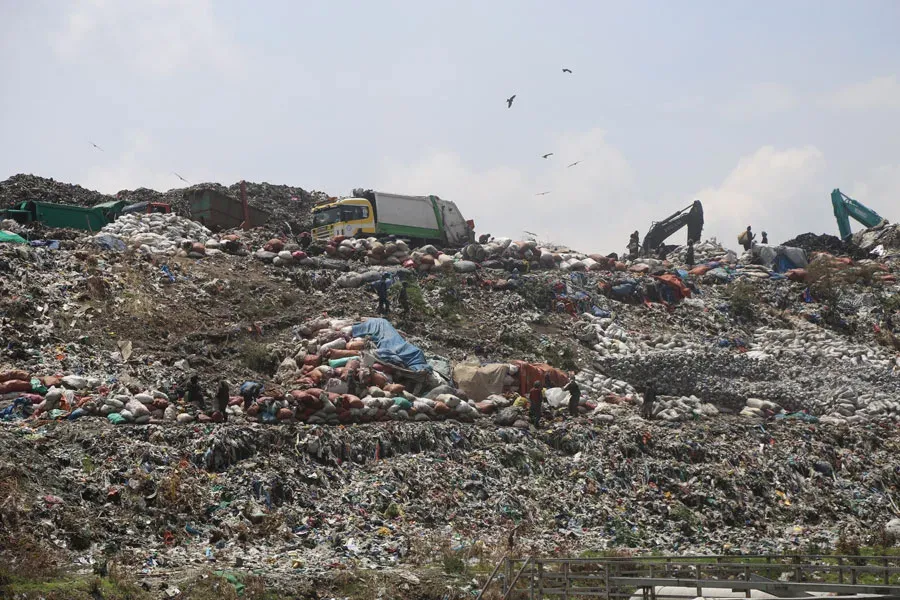
Ethiopia faces several hurdles in waste management, including low recycling rates, limited resources, inadequate infrastructure, and underdeveloped markets for recyclables.
However, some enterprises are adopting a circular economy approach, viewing waste as a valuable resource rather than a burden.
While Kubik, which specializes in converting plastic waste into building materials, is one of the biggest and most popular startups in Ethiopia, there are several other early-stage green businesses. Rebul Manufacturing is one such enterprise engaged in this business by transforming plastic bottles into textiles. Siham Kamil, founder, and CEO of Rebul, explains that her company uses heat to convert crushed plastic bottles into a cotton-like material.
“We have even bigger plans for the future,” Siham says, referring to their expansion goals. “After creating the cotton-like material, we follow traditional weaving methods. Elderly women weave the material into fibers, which are then used to make rugs.”
Siham highlights the cost-effectiveness of their process, mentioning that crushed plastic bottles cost only 40 birr per kg.
Siham’s project is among the top ten finalists in a green business incubation program organized by Reach for Change, a social enterprise incubator focused on improving youth and children’s lives.
Last month, Reach for Change partnered with the IKEA Foundation to support young Ethiopian entrepreneurs developing businesses that reduce waste and promote a circular economy. The three-year, $2.5 million project aims to create an ecosystem that fosters the growth of waste management and circular enterprises.
The project provides capacity building, tailored skills training, and funding to green entrepreneurs, helping them launch and expand their ventures. It targets a total of 105 green businesses through two main components: the Green Business Incubator and the Green Innovation Lab.
The Green Business Lab will incubate and support 30 small and medium enterprises (SMEs) focused on waste management and circular businesses over three years. Rebul, Husky Energy and Technologies (which converts coffee husks and biomass waste into fuel pellets), and Askema Engineering (a manufacturer of eco-friendly brake pads) were among the first ten finalists in the Green Business Incubator program.
Other enterprises in the program include-
Share this post:
Daniel Metaferiya(updated)
At Shega, we do more than tell stories. We help you make an impact. Our platforms, data, and expertise connect brands, organizations, and investors to the audiences and insights that matter.
Reach, engage, and grow with us.
Get in Touch
Healthcare Startup Debuts Prescription Platform
03 March 2025
Can AliExpress Unlock Ethiopia’s E-Commerce Potential?
25 August 2024

Ethiopia’s Delicate Dance with Personal Data Protection
24 August 2024
Ethiopian Tradition Sparks Insurance Revolution
17 August 2024
Addis Ababa-Based Agri-Tech Startup Takes on Poultry
15 August 2024
Latest Stories
22 December 2025
𝗗𝗲𝘀𝗶𝗴𝗻𝗲𝗱 𝗳𝗼𝗿 𝗪𝗵𝗼𝗺? 𝗧𝗵𝗲 𝗠𝗶𝗿𝗮𝗴𝗲 𝗼𝗳 𝗪𝗼𝗺𝗲𝗻-𝗖𝗲𝗻𝘁𝗿𝗶𝗰 𝗗𝗶𝗴𝗶𝘁𝗮𝗹 𝗙𝗶𝗻𝗮𝗻𝗰𝗲 𝗶𝗻 𝗘𝘁𝗵𝗶𝗼𝗽𝗶𝗮 QA
By Chilen14 December 2025
From Campus Idea to Satellite TV: Ethiopia Gets Its First Home Shopping Channel QA test
By ChilenLatest Stories
𝗗𝗲𝘀𝗶𝗴𝗻𝗲𝗱 𝗳𝗼𝗿 𝗪𝗵𝗼𝗺? 𝗧𝗵𝗲 𝗠𝗶𝗿𝗮𝗴𝗲 𝗼𝗳 𝗪𝗼𝗺𝗲𝗻-𝗖𝗲𝗻𝘁𝗿𝗶𝗰 𝗗𝗶𝗴𝗶𝘁𝗮𝗹 𝗙𝗶𝗻𝗮𝗻𝗰𝗲 𝗶𝗻 𝗘𝘁𝗵𝗶𝗼𝗽𝗶𝗮 QA
22 December 2025
From Campus Idea to Satellite TV: Ethiopia Gets Its First Home Shopping Channel QA test
14 December 2025

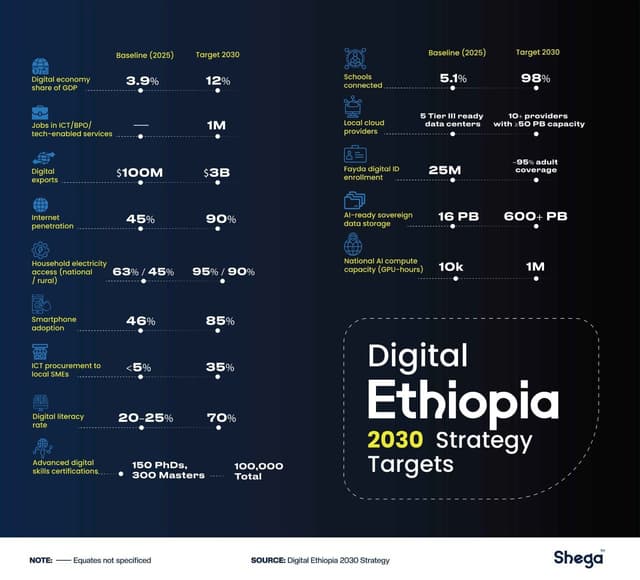
𝗗𝗮𝘁𝗮 𝗦𝗼𝘃𝗲𝗿𝗲𝗶𝗴𝗻𝘁𝘆, 𝗧𝗲𝗰𝗵-𝗦𝗮𝘃𝘃𝘆 𝗖𝗶𝘃𝗶𝗹 𝗦𝗲𝗿𝘃𝗮𝗻𝘁𝘀 & 𝟭 𝗺𝗶𝗹𝗹𝗶𝗼𝗻 𝗜𝗧 𝗷𝗼𝗯𝘀: 𝗨𝗻𝗽𝗮𝗰𝗸𝗶𝗻𝗴 𝗘𝘁𝗵𝗶𝗼𝗽𝗶𝗮’𝘀 𝟮𝟬𝟯𝟬 𝗗𝗶𝗴𝗶𝘁𝗮𝗹 𝗥𝗼𝗮𝗱𝗺𝗮𝗽 on Qa strapi
11 December 2025
Healthcare Startup Debuts Prescription Platform
03 March 2025
Can AliExpress Unlock Ethiopia’s E-Commerce Potential?
25 August 2024
Ethiopia’s Delicate Dance with Personal Data Protection
24 August 2024
Ethiopian Tradition Sparks Insurance Revolution
17 August 2024
Addis Ababa-Based Agri-Tech Startup Takes on Poultry
15 August 2024