Ad

Ad

Progress for group 0 ad

Kaleab Girma
Addis Ababa, Ethiopia
Ethiopia’s two telecom operators, Ethio Telecom and Safaricom Ethiopia, are selling locked smartphones that prevent users from using the other company’s SIM cards.
The locked smartphones that are tied to a specific carrier are also being sold with inconsistent disclosures to buyers.
When Shega visited Safaricom Ethiopia and Ethio Telecom sales shops in Bole, Addis Ababa, the sales agents failed to mention that the phones were locked. This information was only revealed after Shega inquired about the phone’s compatibility.
At the Safaricom Shop Shega went to, the new telecom operator sold two phones called Kimem Kerefa and Kimem Nana that were partially locked. These dual SIM phones could only be used if a Safaricom SIM is inserted in one of the slots.
On the other hand, the Ethio Telecom Sales Shop that Shega visited also sold some locked phones. In the case of Ethio Telecom’s locked phones, both SIM card slots were tied to Ethio Telecom only.
Shega also checked Telegebeya, a new online platform for purchasing products, such as mobile phones, and internet modems from Ethio Telecom. Some of the phones listed on the website were locked and had a description stating, “Ethio Telecom Network Locked.”
SIM locking is very common around the world. Locked phones have a software code on them that prevents the user from using other networks.
The reason many network providers SIM lock their phones is that they offer phones at a discount to customers in exchange for a contract to pay for the use of the network for a specified period, usually between one and three years.
This business model allows the company to recoup the cost of the phone over the life of the contract.
The law in other countries dictates that consumers buying new cell phones must be informed of the existence of any SIM lock (also known as a network lock) on their phone before the sale, and phone companies must unlock handsets upon request, without fee, when a consumer comes to the end of their contract.
Habtamu Hailemeskel, a consultant and attorney at law specializing in business and investment laws, states that Ethiopian laws also stipulate that such information needs to be communicated to buyers.
“The Telecommunications Consumer Rights and Protection Directive states that a telecom operator must provide the consumer with a description of the equipment and services it offers, including the rates, terms, and conditions,” said Habtamu.
The phones sold by both Ethio Telecom and Safaricom are subsidized to varying degrees and are cheaper than market prices, but customers are required to use the carrier’s SIM card indefinitely in exchange for a one-time discount at purchase.
Sales agents at both telecom shops told Shega that they do not know when the network lock on the phones will be lifted, if at all.
“The fact that the phones are not locked to a specific period is another issue that violates the consumer’s rights,” Habtamu told Shega.
Habtamu adds the regulator, the Ethiopian Communications Authority (ECA), should be blamed for its lack of oversight.
The Authority, established in 2019, is mandated to safeguard the interest of Consumers of Communications Services in Ethiopia.
Getachew Alemayehu, public relations officer at the Ethiopian Communication Authority, stated that the regulator has not received any official complaint over the issue.
“The practice is something that would hurt the end user, and we are open to anyone who has a grievance over the matter,” Getachew told Shega.
Consumer advocates argue that phones should come unlocked by default, as it makes it easier for consumers to switch networks, resell their phones, or give them to someone else. The UK, Singapore, and Canada have banned the practice of selling locked phones.
Safaricom Ethiopia did not respond to Shega’s Email before the publication of this article and Ethio Telecom could not be reached.
Share this post:
Kaleab Girma
At Shega, we do more than tell stories. We help you make an impact. Our platforms, data, and expertise connect brands, organizations, and investors to the audiences and insights that matter.
Reach, engage, and grow with us.
Get in Touch
Undercurrents of USAID Funding Freeze in Ethiopia
01 March 2025

ECMA Opens Door to Capital Market Innovation with Launch of Sandbox1
24 November 2024

Ethiopia’s Delicate Dance with Personal Data Protection
24 August 2024
Latest Stories
22 December 2025
𝗗𝗲𝘀𝗶𝗴𝗻𝗲𝗱 𝗳𝗼𝗿 𝗪𝗵𝗼𝗺? 𝗧𝗵𝗲 𝗠𝗶𝗿𝗮𝗴𝗲 𝗼𝗳 𝗪𝗼𝗺𝗲𝗻-𝗖𝗲𝗻𝘁𝗿𝗶𝗰 𝗗𝗶𝗴𝗶𝘁𝗮𝗹 𝗙𝗶𝗻𝗮𝗻𝗰𝗲 𝗶𝗻 𝗘𝘁𝗵𝗶𝗼𝗽𝗶𝗮 QA
By Chilen14 December 2025
From Campus Idea to Satellite TV: Ethiopia Gets Its First Home Shopping Channel QA test
By ChilenLatest Stories
𝗗𝗲𝘀𝗶𝗴𝗻𝗲𝗱 𝗳𝗼𝗿 𝗪𝗵𝗼𝗺? 𝗧𝗵𝗲 𝗠𝗶𝗿𝗮𝗴𝗲 𝗼𝗳 𝗪𝗼𝗺𝗲𝗻-𝗖𝗲𝗻𝘁𝗿𝗶𝗰 𝗗𝗶𝗴𝗶𝘁𝗮𝗹 𝗙𝗶𝗻𝗮𝗻𝗰𝗲 𝗶𝗻 𝗘𝘁𝗵𝗶𝗼𝗽𝗶𝗮 QA
22 December 2025
From Campus Idea to Satellite TV: Ethiopia Gets Its First Home Shopping Channel QA test
14 December 2025

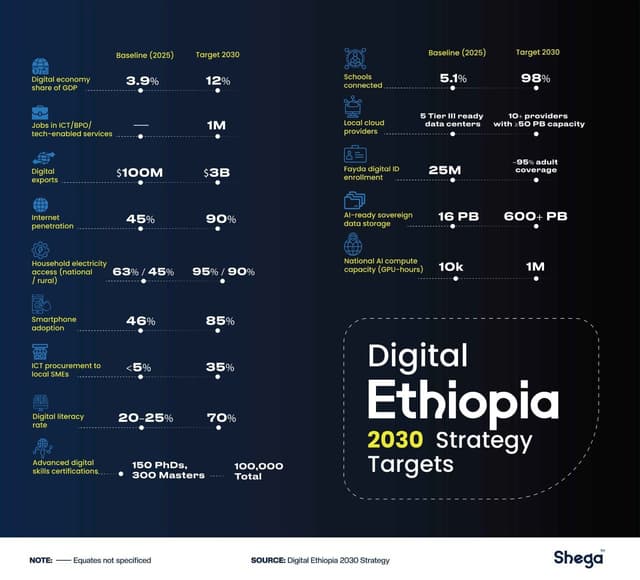
𝗗𝗮𝘁𝗮 𝗦𝗼𝘃𝗲𝗿𝗲𝗶𝗴𝗻𝘁𝘆, 𝗧𝗲𝗰𝗵-𝗦𝗮𝘃𝘃𝘆 𝗖𝗶𝘃𝗶𝗹 𝗦𝗲𝗿𝘃𝗮𝗻𝘁𝘀 & 𝟭 𝗺𝗶𝗹𝗹𝗶𝗼𝗻 𝗜𝗧 𝗷𝗼𝗯𝘀: 𝗨𝗻𝗽𝗮𝗰𝗸𝗶𝗻𝗴 𝗘𝘁𝗵𝗶𝗼𝗽𝗶𝗮’𝘀 𝟮𝟬𝟯𝟬 𝗗𝗶𝗴𝗶𝘁𝗮𝗹 𝗥𝗼𝗮𝗱𝗺𝗮𝗽 on Qa strapi
11 December 2025
Undercurrents of USAID Funding Freeze in Ethiopia
01 March 2025
ECMA Opens Door to Capital Market Innovation with Launch of Sandbox1
24 November 2024
Ethiopia’s Delicate Dance with Personal Data Protection
24 August 2024