




As well as its benefits, there are many challenges that come with doing international trade and the right technology can minimise problems in a supply chain. Smart contracts are a good way to speed up transactions and make them secure, especially when recorded on a blockchain.
As somebody with a strong interest in Africa it is interesting to see how exports to Europe have tripled over the last few decades. A number of initiatives are in place to improve the flow of goods between both continents, one of which is called EBA.
It stands for Everything but Arms initiative and allows for duty / quota free imports to encourage economic growth in emerging economies. It is also a big incentive for people to import from these places as costs are considerably lower than buying from a developed continent such as Europe or North America.
Smart contracts are perfect for dealing with customers and business associates in a different country because they are immutable and distributed. In a recent investigation by shipping company Maersk, they discovered 200 documents were needed for a simple shipment of flowers from Kenya to the Netherlands. Manual paper based processes like this are still common and information is locked away in organisational silos.
Today 90% of goods in global trade are carried by the shipping industry but supply chains are slowed down by complex point to point communications. A distributed ledger platform uses smart contracts on a blockchain and is accessible to everybody in the production line, including the end-consumer in some cases. This creates trust, efficiency and better user experience.
Ethiopia is the fastest growing economy in Africa and has many import opportunities available. The services sector is at an all time high and there are 12 industrial parks either under construction or fully operational. Their leather products and textiles are being sold throughout the world with positive endorsements from Tescos, Primark and H&M.
The Ethiopian Investment Commission, Ethiopian Leather Industries Association and Addis Ababa Chamber of Commerce oversee the country’s textile industry. Manufacturers can also be contacted directly to discuss products available and shipping. Once this has been arranged, finding the right technology for importing goods is critical – especially when a company is dealing with people they have never met.
Input Output Hong Kong is a technology firm focused on providing financial services to three billion unbanked people in the world. They are a blockchain company with global reach and have a presence in Ethiopia, where they have been working with Ethiopian government for last one year after they signed a memorandum of understanding (MoU) with the government. Both parties are working to tackle some of the ongoing issues in Ethiopia using innovative technologies and smart contracts.
IOHK trained and graduated Ethiopian students in Haskall, a programming language used to build the Cardano blockchain. The grudates are now working for IOHK in Addis Abeba.
Finance in emerging economies can be a problem when paying for services remotely. Sending money abroad is costly and one of the main challenges importers and exporters face. Exchange rates change on a daily basis and although relatively low compared to the rest of Africa, corruption still exists. Cash payments account for majority of the transactions in this market so importers need good communication with trusted partners to ensure no funds are lost.
Companies must research the market and who they are dealing with thoroughly before paying for anything. That being said, as crytpocurrencies and smart contracts continue to become more accessible, I’m sure they will have a drastic impact in this space.
Air freight is a fast and reliable way to move goods between continents. Although it can be expensive, the method is perfect for FMCG and temperature sensitive goods. With large heavier shipments it is often cheaper to transport by sea but with lighter products such as flowers, air freight is the best option.
Ethiopia is the second largest flower producer in Africa after Kenya with a 9% share of the global market. The country earned $271 million USD in 2017 from exporting horticultural products to mainly Belgium, Netherlands, Saudi Arabia and the USA. With weekly often daily cargo flights out of Ethiopia, flowers are available for import almost anywhere in the World. The climate of this country is perfect for growing roses as it provides year-round natural light combined with hot days and cold nights. As goods need to be moved quickly, there is a demand in this sector for technologies offering real-time updates, temperature analysis and smart contracts.
Modum.io and Smart Containers are two companies in this space I am a fan of and have been tracking for a while. Modum.io are utilising blockchain technology and smart contracts to improve the supply chain of temperature sensitive goods. Beginning with the pharmaceutical industry they are now moving into other sectors, such as horticulture. Sensors are placed into containers (ship or air) and record environmental conditions a package experience en route to its destination. Founded in 2016 and based in Zurich, the company aim to streamline supply chains through emerging technologies. They are a good example of how smart contracts can store and verify critical data faster and more efficiently.
+Similarily, Smart Containers is expanding its service to improve the import and export of fresh produce. The company claim to be 75 times
Share this post:

Team Shega
Partner with Shega
At Shega, we do more than tell stories. We help you make an impact. Our platforms, data, and expertise connect brands, organizations, and investors to the audiences and insights that matter.
- Shega Brand Studio: Strategy, media, and storytelling that drive results.
- Shega Media Advertising: Reach 2M+ engaged readers, listeners, and viewers every month.
- Shega Research & Advisory: Tailored studies and market insights built for action.
- Shega Insights: Explore Ethiopia's markets with our AI-powered intelligence platform.
Reach, engage, and grow with us.
Get in TouchRelated News



Reserve Stablecoin – A Decentralized Currency for Africa
22 October 2019

Blockchain is Here and it’s Changing The World
07 December 2018
Latest Stories
22 December 2025
𝗗𝗲𝘀𝗶𝗴𝗻𝗲𝗱 𝗳𝗼𝗿 𝗪𝗵𝗼𝗺? 𝗧𝗵𝗲 𝗠𝗶𝗿𝗮𝗴𝗲 𝗼𝗳 𝗪𝗼𝗺𝗲𝗻-𝗖𝗲𝗻𝘁𝗿𝗶𝗰 𝗗𝗶𝗴𝗶𝘁𝗮𝗹 𝗙𝗶𝗻𝗮𝗻𝗰𝗲 𝗶𝗻 𝗘𝘁𝗵𝗶𝗼𝗽𝗶𝗮 QA
By Chilen14 December 2025
From Campus Idea to Satellite TV: Ethiopia Gets Its First Home Shopping Channel QA test
By ChilenLatest Stories
𝗗𝗲𝘀𝗶𝗴𝗻𝗲𝗱 𝗳𝗼𝗿 𝗪𝗵𝗼𝗺? 𝗧𝗵𝗲 𝗠𝗶𝗿𝗮𝗴𝗲 𝗼𝗳 𝗪𝗼𝗺𝗲𝗻-𝗖𝗲𝗻𝘁𝗿𝗶𝗰 𝗗𝗶𝗴𝗶𝘁𝗮𝗹 𝗙𝗶𝗻𝗮𝗻𝗰𝗲 𝗶𝗻 𝗘𝘁𝗵𝗶𝗼𝗽𝗶𝗮 QA
22 December 2025
From Campus Idea to Satellite TV: Ethiopia Gets Its First Home Shopping Channel QA test
14 December 2025

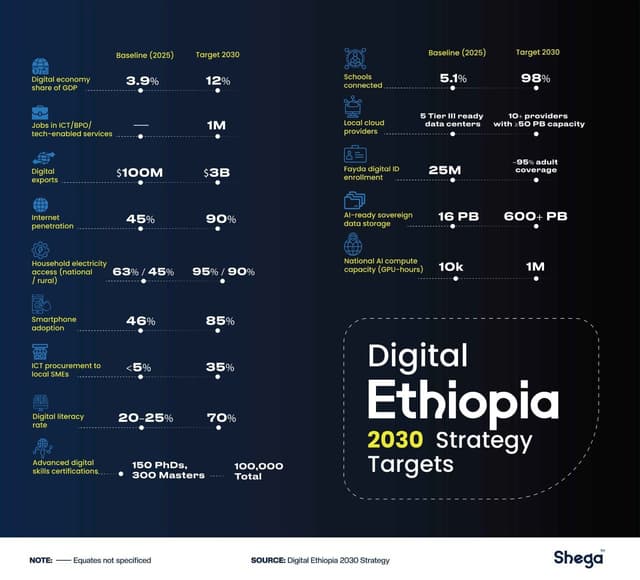
𝗗𝗮𝘁𝗮 𝗦𝗼𝘃𝗲𝗿𝗲𝗶𝗴𝗻𝘁𝘆, 𝗧𝗲𝗰𝗵-𝗦𝗮𝘃𝘃𝘆 𝗖𝗶𝘃𝗶𝗹 𝗦𝗲𝗿𝘃𝗮𝗻𝘁𝘀 & 𝟭 𝗺𝗶𝗹𝗹𝗶𝗼𝗻 𝗜𝗧 𝗷𝗼𝗯𝘀: 𝗨𝗻𝗽𝗮𝗰𝗸𝗶𝗻𝗴 𝗘𝘁𝗵𝗶𝗼𝗽𝗶𝗮’𝘀 𝟮𝟬𝟯𝟬 𝗗𝗶𝗴𝗶𝘁𝗮𝗹 𝗥𝗼𝗮𝗱𝗺𝗮𝗽 on Qa strapi
11 December 2025


Related News
Reserve Stablecoin – A Decentralized Currency for Africa
22 October 2019
Blockchain is Here and it’s Changing The World
07 December 2018