Ad

Ad

Progress for group 0 ad

Team Shega
Addis Ababa, Ethiopia
We are living in an unprecedented time where we are witnessing one of the major changes in the world order as a result of the COVID-19 pandemic. The pandemic has interrupted lives, halted economic activities, and pushed business and the vulnerable segment of the population towards the edge. Governments around the world even the most developed nations have been struggling to support their population and market from collapse.
Although having relatively much fewer cases and a small number of deaths so far, the COVID pandemic has greatly impacted Ethiopia and caused an unprecedented amount of damage while the horizon of the impact is yet to be see fullyn. As of June 2, 2020, Ethiopia has confirmed 1344 cases and 14 deaths. Even though this numbers might be seen as comparing to many other global statistics, it has been spiking lately.
Covid 19 — a Once in a lifetime Phenomena
While the Covid-19 started as a health crisis around the world, it has now morphed into an economic crisis around the world which has played a major role in wiping Billions from the stock market and resulted in an all-time low price for commodities like crude oil fuelled by the subsequent measures taken by government and business around the world to mitigate the spread of the Coronavirus.
In Ethiopia for example, decisions such as the international borders closing, local travel ban, partial closure of business, and government operation can be considered as the highlights of the Covid-19 mitigation response.
However, in the middle of COVID-driven disruptions around the world, there seem to be certain areas of sectors that seem to be benefited from this pandemic. Among those is the Digital Economy, which saw a rise in the usage of tech platforms and services. Global giants such as Amazon have seen a spike in the use of e-commerce services, streaming platforms such as Netflix and Spotify have reported an anticipated growth in subscribers and web conference services such as Zoom and WebEx have seen an unprecedented boost in usage, as much as 300% percent due to COVID-19.
A similar trend has happened during the, 2003 SARS outbreak in China. At the time, the now e-commerce giant, Alibaba was in the middle of launching its consumer-facing marketplace platform called Taobao. While the outbreak has disrupted the economy and forced closure of business operations, it has also impacted consumer behavior as people who were forced to stay at home to avoid contracting the virus started turning to the eCommerce platforms like Taobab and JD to order online.
In the, 2016 book “Alibaba: The House That Jack Ma Built,” author Duncan Clark writes that the SARS outbreak “came to represent the turning point when the Internet emerged as a truly mass medium in China.”
When we look at our context, various reports and sensing the ground clearly show that Ethiopia is yet to leverage digital technology to supplement it’s economic development.
There have been multiple initiatives that have been started but the progress so far has been lagging behind from where the rest of the world is and even when compared to its neighbors.
Remarkably, COVID-19 is bringing a new dynamic to the context and it seems to be having a positive impact on digitization by forcing people, businesses, and the government to embrace digital services at a faster rate.
While the impact of COVID-19 in the adoption and usage of digital tools is expected to touch almost every aspect of business and activities, Let’s look at some of the sectors where impacts have been demonstrated highly in Ethiopia’s context.

Figure 1. Some of the Digital service use cases
,,,,Telecom Usage,,
Telecom usage has been reported to be an area that has been positively impacted by the Covid-19 where the usage has , increased tremendously over the last two months. This is more evident on internet usage as it has been reported a massive surge in Home internet subscriptions to the extent of Ethio telecom shops running out of Internet modems and dongles to meet customers’ demand.
The, recent price cut by Ethio Telecom which saw up to 65% tariff reduction for residential fixed broadband internet service users, 69% for enterprises as well as offering a new ,“Stay at home discounted packages”, must have played a significant in encouraging new customers to get connected and stay online longer.
,Education
Schools are adopting online teaching tools as the Ministry of Education advocates for the use of digital communication tools. Telegram is currently being used by many private educational institutions to continue the Education that has been halted by COVID. Telegram seems to be the preferred tools for most schools due to its flexible multimedia file sharing and group functionalities.
Some schools are also using locally developed Learning management systems as well platforms like Google ClassRoom. Private colleges and universities have also started offering online class sessions using web conferencing tools such as zoom to conduct lectures while classrooms are shut down due to Covid-19.
In response to the ever-increasing use of online education systems, the higher education agency has responded to the extent of drafting a new regulation to guide online education delivery which will surely encourage educational institutions and the private sector to follow the digital route of delivering education digitally.
Ethio Telecom also made the , National Academic Digital Library of Ethiopia to be accessed free of Data charge aiming for a Higher Education Teachers and Student to access Educational resources for free.
Public Health
While being at the forefront of combating the Pandemic, the Ministry of health and respective health institutions across the country have managed to integrate, digital tools in their Covid-19 response process.
Among these include data collection tools, e-learning platform for frontline workers on Covid-19, call center facilities, web platforms and social media campaigns that enable people to access near-real-time data on the pandemic, and various applications that are used to manage the work process of testing, monitoring, and tracking of cases in response to the COVID-19 pandemic.
Furthermore, Ethiopian Public health institute has recently launched a smartphone phone app called “Debbo” which tracks people and alerts them if they have been in close contact with someone infected with the coronavirus.

Figure 2. Some of the Digital Tools being used for Covid-19 response
The Ethiopia COVID-19 Response Team (ECRT), which was created on March 16, 2020, from a single tweet and has grown to over 1,400 volunteers from all over the world, spanning 15+ projects. The team has been helping the Ministry of Health and other government entities in various ways and is engaging in different workstreams including surveillance, awareness, food delivery, DIY gear, and volunteer training .
E-Commerce and Delivery
Covid-19 has also put the spotlight on the e-commerce sector into the urban mainstream where small and big shops ranging from Hotels to small shops are now setting up shop on social media pages, telegram channels, and e-commerce sites at an unprecedented pace.
Taking advantage of the unique value proposition e-commerce offers to maintain social distancing, a flurry of new start-ups in the e-commerce space that aims to disrupt the market are popping up while those who have been around for a while are Share this post: Team Shega At Shega, we do more than tell stories. We help you make an impact. Our platforms, data, and expertise connect brands, organizations, and investors to the audiences and insights that matter. Reach, engage, and grow with us. Partner with Shega

Healthcare Startup Debuts Prescription Platform
03 March 2025
Can AliExpress Unlock Ethiopia’s E-Commerce Potential?
25 August 2024

Ethiopia’s Delicate Dance with Personal Data Protection
24 August 2024

Ethiopian Tradition Sparks Insurance Revolution
17 August 2024

Addis Ababa-Based Agri-Tech Startup Takes on Poultry
15 August 2024
Latest Stories
22 December 2025
𝗗𝗲𝘀𝗶𝗴𝗻𝗲𝗱 𝗳𝗼𝗿 𝗪𝗵𝗼𝗺? 𝗧𝗵𝗲 𝗠𝗶𝗿𝗮𝗴𝗲 𝗼𝗳 𝗪𝗼𝗺𝗲𝗻-𝗖𝗲𝗻𝘁𝗿𝗶𝗰 𝗗𝗶𝗴𝗶𝘁𝗮𝗹 𝗙𝗶𝗻𝗮𝗻𝗰𝗲 𝗶𝗻 𝗘𝘁𝗵𝗶𝗼𝗽𝗶𝗮 QA
By Chilen14 December 2025
From Campus Idea to Satellite TV: Ethiopia Gets Its First Home Shopping Channel QA test
By ChilenLatest Stories
𝗗𝗲𝘀𝗶𝗴𝗻𝗲𝗱 𝗳𝗼𝗿 𝗪𝗵𝗼𝗺? 𝗧𝗵𝗲 𝗠𝗶𝗿𝗮𝗴𝗲 𝗼𝗳 𝗪𝗼𝗺𝗲𝗻-𝗖𝗲𝗻𝘁𝗿𝗶𝗰 𝗗𝗶𝗴𝗶𝘁𝗮𝗹 𝗙𝗶𝗻𝗮𝗻𝗰𝗲 𝗶𝗻 𝗘𝘁𝗵𝗶𝗼𝗽𝗶𝗮 QA
22 December 2025
From Campus Idea to Satellite TV: Ethiopia Gets Its First Home Shopping Channel QA test
14 December 2025

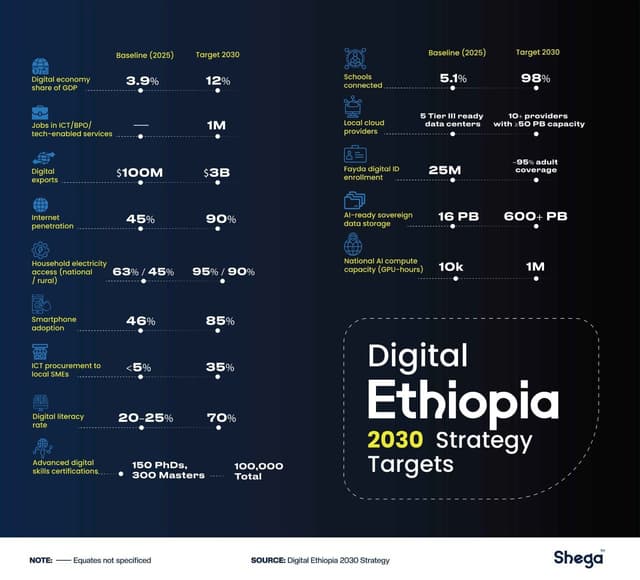
𝗗𝗮𝘁𝗮 𝗦𝗼𝘃𝗲𝗿𝗲𝗶𝗴𝗻𝘁𝘆, 𝗧𝗲𝗰𝗵-𝗦𝗮𝘃𝘃𝘆 𝗖𝗶𝘃𝗶𝗹 𝗦𝗲𝗿𝘃𝗮𝗻𝘁𝘀 & 𝟭 𝗺𝗶𝗹𝗹𝗶𝗼𝗻 𝗜𝗧 𝗷𝗼𝗯𝘀: 𝗨𝗻𝗽𝗮𝗰𝗸𝗶𝗻𝗴 𝗘𝘁𝗵𝗶𝗼𝗽𝗶𝗮’𝘀 𝟮𝟬𝟯𝟬 𝗗𝗶𝗴𝗶𝘁𝗮𝗹 𝗥𝗼𝗮𝗱𝗺𝗮𝗽 on Qa strapi
11 December 2025
Healthcare Startup Debuts Prescription Platform
03 March 2025
Can AliExpress Unlock Ethiopia’s E-Commerce Potential?
25 August 2024
Ethiopia’s Delicate Dance with Personal Data Protection
24 August 2024
Ethiopian Tradition Sparks Insurance Revolution
17 August 2024
Addis Ababa-Based Agri-Tech Startup Takes on Poultry
15 August 2024