Ad

Ad

Progress for group 0 ad

Partner Content
Addis Ababa, Ethiopia
Ethiopia’s tech innovators and digitally enabled service providers are confronted by a daunting reality. While they hold control over the acceptance and quality of their products, they feel that their ability to impact millions of Ethiopians is partially beyond their grasp.
Information and Communication Technology (ICT) infrastructure in Ethiopia is at the heart of this matter.
Similar to how roads are crucial for mobility, ICT infrastructure is indispensable for the effective deployment of technology-related services. Serving as the bedrock of digitally enabled services and acting as both an enabler and a potential deal breaker, ICT infrastructure encompasses software, hardware, firmware, networks, and portals.
The responsibility for improving ICT infrastructure in Ethiopia and how the lack of infrastructure impedes the comprehensive implementation of edtech solutions in Ethiopia were discussed on the last episode of Edtech Mondays radio show produced by Mastercard Foundation and Shega Media & technology.
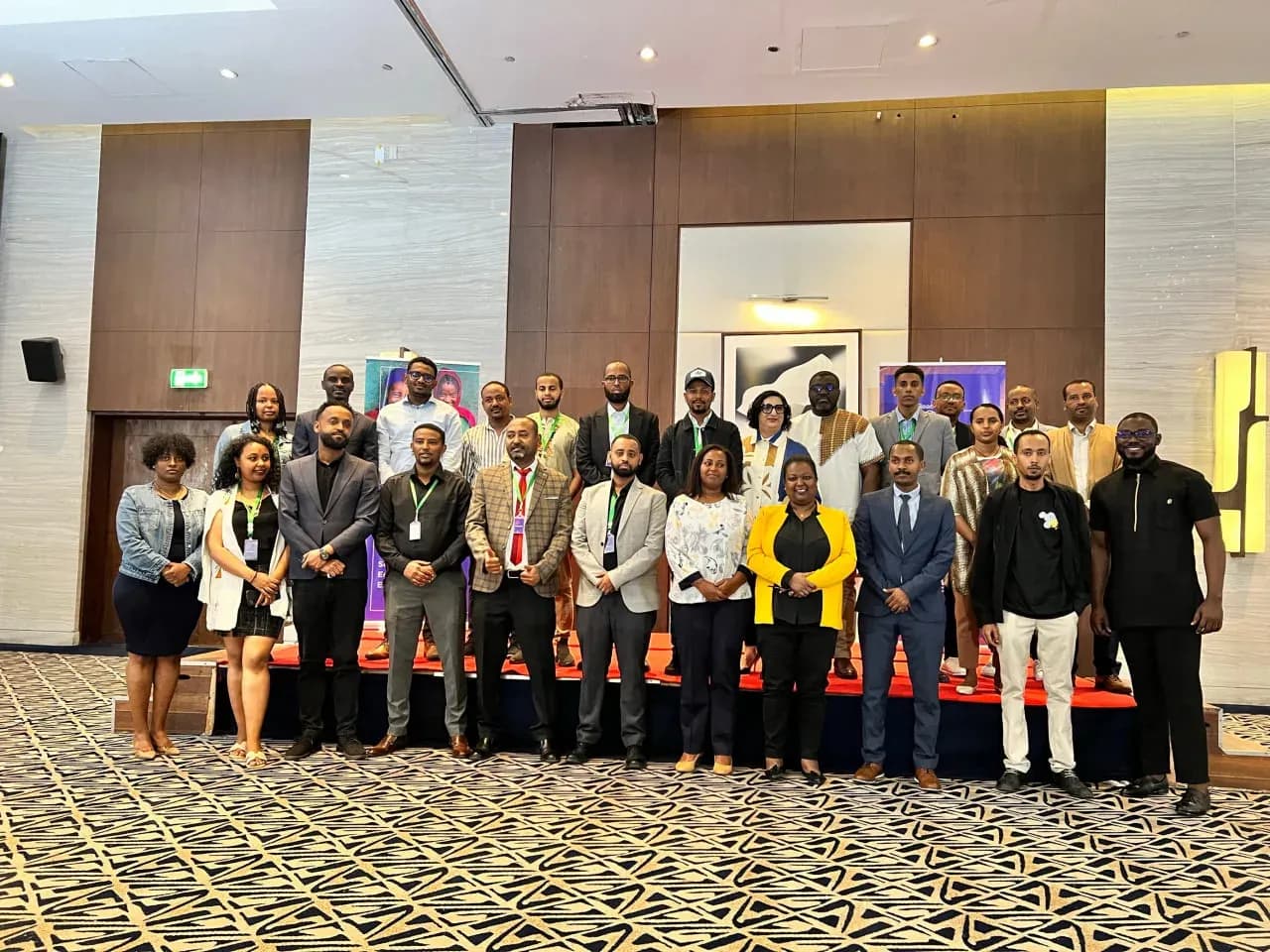
Hosted by Rediet Meshesha and featuring Yoftahe Yohannes, Senior Project Manager and PMI Future SO honoree, and Yonatan Yeneneh, Head of Projects at Ethiopia i Engineering Group, the show covered several aspects ranging from ICT sector policy and deployment to connectivity and power.
Telecom infrastructure is crucial for a digital economy, as seamless and equitable access to the Internet is essential for the operation of various digital products and services.
“While there has been significant improvement in connectivity access in Ethiopia, it is evident that internet accessibility has not reached the potential achieved by other countries with a similar economic status,” stated Yoftahe on the radio show that was aired on Fana FM and ten other affiliated stations.
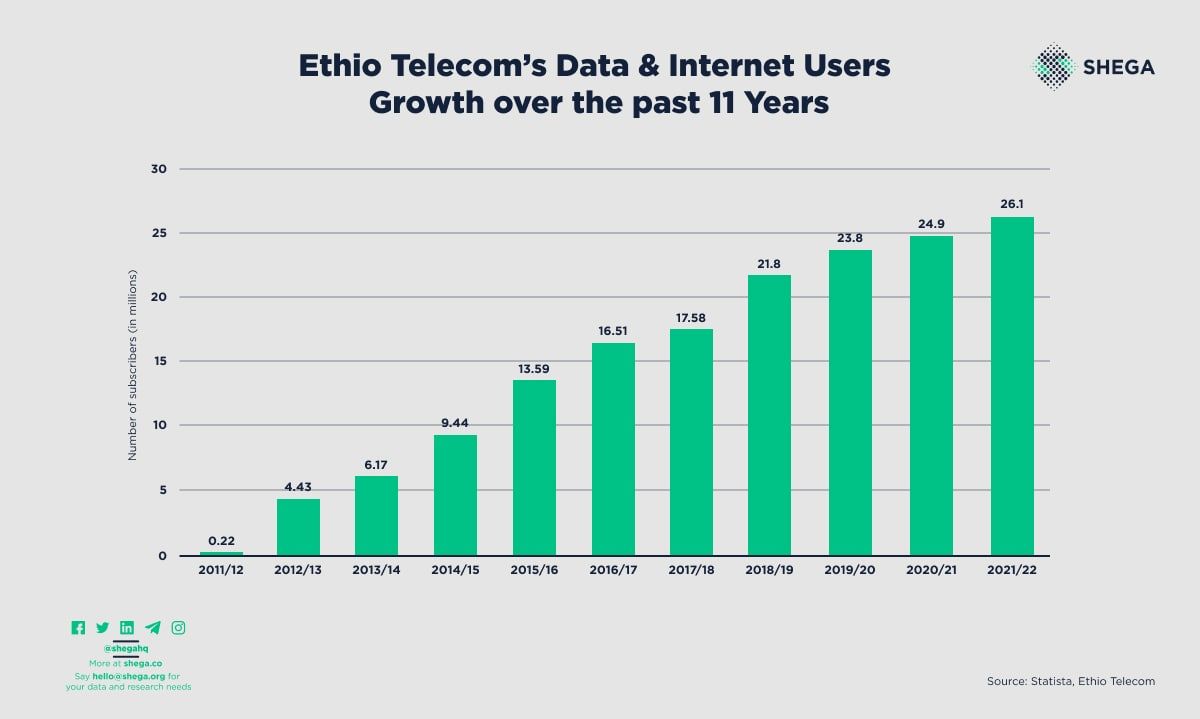
Investment in network expansion and the acceleration of mobile penetration have led to an increase in Internet coverage from 1.1% in 2011 to 25% in 2022. However, despite this impressive growth rate, coverage still remains low.
Yonathan highlights the history of telecom monopoly in Ethiopia as one of the major causes of this low penetration. Until last year, Ethio Telecom had been the sole provider of infrastructure and bore the responsibility of driving the country’s tech growth.
“Ethio Telecom has been carrying more than its weight in the telecom sector and has been the backbone for the ICT sector by providing access to the internet for a long period of time. Being the sole provider in a country like Ethiopia, with a population of more than 100 million, the major objective that Ethio Telecom had was expanding access to the internet and not focusing on the quality,” said Yonathan.
Ethio Telecom, the oldest telecom operator in Africa, has around 7,000 network towers, which is not sufficient to cover a large country like Ethiopia, according to the panelists.
As with other sectors, this reality has had a negative impact on education, slowing down the substantial growth of technology-integrated learning.
“There are multiple edtech platforms designed to facilitate and enhance the learning process. However, these platforms are dependent on connectivity, directly affecting their impact,” said Yonathan.
“Sometimes I see students standing at the gate of my house so that they can crack the Wi-Fi code and use the internet. This shows how little access they have from their homes or the fact that they may not afford to access it, and that is something that needs to be worked on as well,” added Yoftahe.
However, the panelists are optimistic about a more promising future due to the liberalization of the sector. Safaricom Ethiopia’s entry into the Ethiopian market has marked the end of Ethio Telecom’s monopoly. With an anticipated investment of $10 billion in the country, Safaricom is set to enhance connectivity infrastructure and improve its quality. Additionally, the tender process to grant another telecom license is currently underway, providing much-needed support.
In exploring the vital role of the internet in enriching education through Information and Communication Technology (ICT), it is imperative to acknowledge the critical factor of electricity accessibility.
According to the recently launched National Electrification Program (NEP) 2.0, 44% of the country has access to electricity (33% on-grid, 11% off-grid).
“In Ethiopia, where more than 80 percent of elementary schools are located in rural areas, ensuring a reliable power supply becomes a critical factor in implementing effective ICT initiatives. While efforts have been made by Ethio Telecom and the government to improve infrastructure accessibility, the electric system and related services must be addressed in tandem to achieve meaningful progress,” stated Rediet, the host of the Edtech Mondays Radio show.
The lack of devices is another significant challenge in Ethiopia’s journey. The issue continues to persist as one of the most significant obstacles, particularly among students, impeding their ability to expand their digital knowledge and fully leverage the existing digital learning infrastructure.
When it comes to the role of the private sector, Yoftahe states that there are no notable examples in Ethiopia in this regard.
Yoftahe, who possesses vast experience in the deployment of ICT infrastructure, also notes that the sector is riddled with challenges and does not attract private sector players.
“ICT infrastructure is not prioritized by the government. Similar to other sectors, ICT equipment importers have to go through the process of obtaining a letter of credit, which takes a significant amount of time. Sometimes, by the time you acquire the letter of credit and install the imported items, they are already outdated,” Yoftahe explained.
While this remains to be addressed by the government, the Senior Project Manager argues that one way Ethiopia can foster a more positive culture in the private sector is by imposing corporate social responsibility on private firms.
“When big corporations like Safaricom Ethiopia enter the country, as a nation, we should be able to inquire about their contributions to the younger generation. It should be seen as a requirement,” added Yoftahe.
Yonathan believes that the attention given to ICT infrastructure has been sufficient and has received significant budget allocations.
For instance, residing on 200 hectares of land, the government has developed infrastructure for ICT Park to attract ICT service companies. The park currently hosts more than 20 companies, including prominent data centers such as Raxio, Wingu Africa, and Red Fox. The government also has plans to manufacture and export IT equipment from this park.
Furthermore, intending to create an ecosystem conducive to innovation and technology development, the federal government has labeled five ICT-related investment areas as eligible for income tax and duty incentives.
“It’s not the attention that’s the problem; it’s the implementation. How are the plans being executed? Is the allocated budget being properly utilized to achieve the set goals? These are the important aspects the government should focus on,” remarked Yonathan.
Yonathan also made an interesting observation on the show to support his argument. He highlighted that many public universities in Ethiopia allocate a significant portion of their annual budget to ICT infrastructure, and in recent years, there has been a trend of constructing data centers in university campuses. Yonathan argues that universities should not be preoccupied with activities that could easily be outsourced. Additionally, he emphasizes that just because one university adopts a specific mechanism or solution, it does not necessarily mean that every other institution shou
Quick Links
#EdTech MondaysShare this post:
Partner Content
At Shega, we do more than tell stories. We help you make an impact. Our platforms, data, and expertise connect brands, organizations, and investors to the audiences and insights that matter.
Reach, engage, and grow with us.
Get in Touch
Billionaire’s Son Fumbles Bag with Fintech Startup
24 November 2024

Unlocking Edtech’s Potential for Equity
29 July 2024

The Financing Gap in Ethiopian EdTech Startups
05 July 2024

Apps to Prepare for Grade 12 Examination in Ethiopia
01 July 2024
Latest Stories
22 December 2025
𝗗𝗲𝘀𝗶𝗴𝗻𝗲𝗱 𝗳𝗼𝗿 𝗪𝗵𝗼𝗺? 𝗧𝗵𝗲 𝗠𝗶𝗿𝗮𝗴𝗲 𝗼𝗳 𝗪𝗼𝗺𝗲𝗻-𝗖𝗲𝗻𝘁𝗿𝗶𝗰 𝗗𝗶𝗴𝗶𝘁𝗮𝗹 𝗙𝗶𝗻𝗮𝗻𝗰𝗲 𝗶𝗻 𝗘𝘁𝗵𝗶𝗼𝗽𝗶𝗮 QA
By Chilen14 December 2025
From Campus Idea to Satellite TV: Ethiopia Gets Its First Home Shopping Channel QA test
By ChilenLatest Stories
𝗗𝗲𝘀𝗶𝗴𝗻𝗲𝗱 𝗳𝗼𝗿 𝗪𝗵𝗼𝗺? 𝗧𝗵𝗲 𝗠𝗶𝗿𝗮𝗴𝗲 𝗼𝗳 𝗪𝗼𝗺𝗲𝗻-𝗖𝗲𝗻𝘁𝗿𝗶𝗰 𝗗𝗶𝗴𝗶𝘁𝗮𝗹 𝗙𝗶𝗻𝗮𝗻𝗰𝗲 𝗶𝗻 𝗘𝘁𝗵𝗶𝗼𝗽𝗶𝗮 QA
22 December 2025
From Campus Idea to Satellite TV: Ethiopia Gets Its First Home Shopping Channel QA test
14 December 2025

𝗗𝗮𝘁𝗮 𝗦𝗼𝘃𝗲𝗿𝗲𝗶𝗴𝗻𝘁𝘆, 𝗧𝗲𝗰𝗵-𝗦𝗮𝘃𝘃𝘆 𝗖𝗶𝘃𝗶𝗹 𝗦𝗲𝗿𝘃𝗮𝗻𝘁𝘀 & 𝟭 𝗺𝗶𝗹𝗹𝗶𝗼𝗻 𝗜𝗧 𝗷𝗼𝗯𝘀: 𝗨𝗻𝗽𝗮𝗰𝗸𝗶𝗻𝗴 𝗘𝘁𝗵𝗶𝗼𝗽𝗶𝗮’𝘀 𝟮𝟬𝟯𝟬 𝗗𝗶𝗴𝗶𝘁𝗮𝗹 𝗥𝗼𝗮𝗱𝗺𝗮𝗽 on Qa strapi
11 December 2025
Billionaire’s Son Fumbles Bag with Fintech Startup
24 November 2024
Unlocking Edtech’s Potential for Equity
29 July 2024
The Financing Gap in Ethiopian EdTech Startups
05 July 2024
Apps to Prepare for Grade 12 Examination in Ethiopia
01 July 2024