Ad

Ad

Progress for group 0 ad
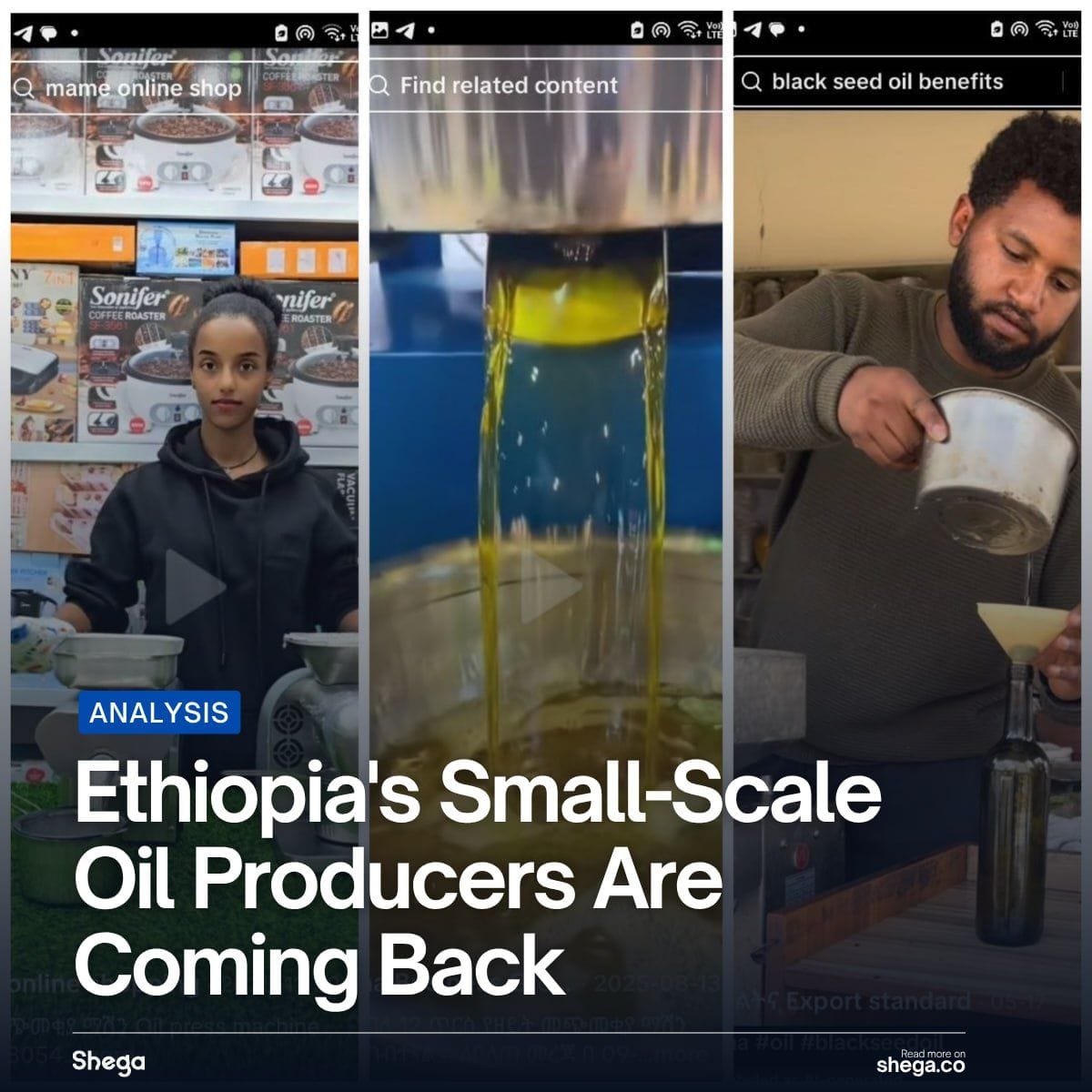
Some twenty years ago, cooking oil in Addis Ababa used to come in a different form. In small neighborhood shops, the oil sat in metal drums whose rims had turned greasy from use. Customers arrived with whatever they had, an empty water bottle or a jerrican, and bought what they could afford. A quarter liter was an ordinary purchase. The oil was local, pressed mostly from noug (Guizotia abyssinica) by small enterprises scattered around the city. If you preferred, you could skip the shop and buy it straight from the press.
Ad

This was no marginal trade. Around 2010, small-scale millers like these supplied 60% of the oil Ethiopia produced for itself. Then, over the following decade, they faded. The state was pushing towards a modern market and loose oil from a barrel did not fit the plan.
Ethiopia's quality standard required cooking oil to be refined. Refined oil goes through much more processing than unrefined oil. It produces a product with a longer shelf life, a higher smoke point, and removes impurities. None of that works for oil ladled from an open drum. Around 2012, the government signaled it would ban the sale of crude oil outright to ensure food safety standards. Enforcement remained patchy for years, but the direction was set and pointed away from the small press.
Economics finished what regulation began. Millers predominantly milled noug seeds, a preferred but expensive oil. Market research studies conducted at the time described the milling operations as characterized by outdated technology, weak market linkages, and risk-averse investment behavior.
Imported palm oil flooded the market and undercut local pressers on price, while compliance was out of reach for a one-room mill. The neighborhood oil seller, once on every other corner, had already slipped into memory.
Today, the barrel is returning, though in a different form. Many shops are now selling homemade cooking oil. But the neighborhood press did not return on nostalgia. New oil-pressing machine has changed the unit of production. It returned because the equipment to run one got cheaper, smaller, and easier to operate.
Much of this is also unfolding on social media, which is part of why the trend is visible at all. On TikTok, a whole supply chain has surfaced. Sellers post the machines, from small countertop presses to larger floor-standing units. Others show the oil itself, pressed in their own neighborhoods and sold by the bottle. A third group simply demonstrates pressing at home, making oil for their own kitchens rather than for sale. The platform has become a marketplace and a how-to channel at once.
For the producers riding this shift, the comeback is measured in daily output and walk-in customers. In Sululta, just north of Addis Abeba, Addis Zemen presses close to 1,000 litres of noug oil a day. According to a sales representative at the company, business is booming as vegetable oil prices climb. "While sunflower oil for five litres is around 2,100 Birr, our oil costs about 1,500," he says, adding that customers can choose between different quality grades. Demand is strongest for the five-litre container, and most buyers, he says, are content with the price.
Ashagrie Zewdu (PhD), Associate Professor at the Center for Food Science and Nutrition, Addis Ababa University, says pure noug oil is still more expensive than imported alternatives.
"Currently, oil millers use blending to produce affordable oil. They blend in other seeds and crops like sesame, corn, and peanuts. There is nothing wrong with blending. It's an industry standard," Ashagrie told Shega.
The professor, who also advises oil millers, says some producers claim their oil is pure noug when that isn't the case. This, he adds, is bad for the sector, and the public needs to be told. "Consumers prefer noug for its health benefits too, which gives it a different advantage over imported palm oil."
One such business selling and advertising its oil as blended is Haymi Baltena, near Kotebe. General Manager Haileyesus Mehari says pure niger oil can reach 1,000 Birr a liter. "To produce five liters, we use about 12 to 13 kilograms of niger seed," says Haileyesus.
Blended versions, usually cut with sesame, bring the price down to around 700 Birr a liter. Walk-in traffic at his shop is rising, and much of it is new. "Some come with prescriptions," he says. "Even if my price is higher than the regular market, I'm still busy taking orders." Running two machines, Haileyesus also turns the press cake, the solid residue left after extraction, into animal feed, which he gives away.
That residue can be part of the economics. Niger seed is roughly 30 to 40 percent oil and about 20 percent protein, so what does not become oil becomes a protein-rich cake prized for fattening livestock and dairy feed. A press that yields oil also yields a saleable by-product, which can soften the math for a small operator.
Oil-pressing machine sellers are also helping drive the comeback. Many regularly promote different machine models on social media, often presenting them as healthier and cheaper options for people who want to start a small oil-pressing business or produce oil at home.
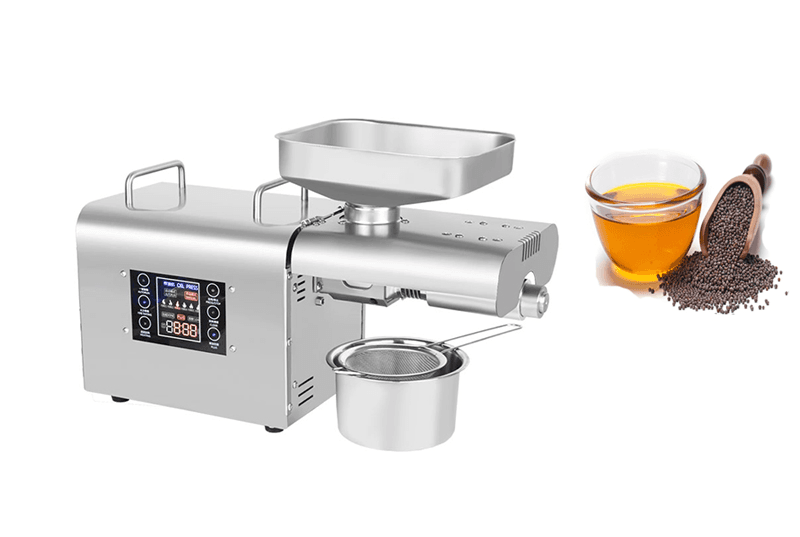
At the lowest rung sit compact electric expellers, stainless-steel screw presses that feed seed through a heated barrel and squeeze out oil continuously. A small electric unit might press a few liters an hour, enough for a household, or a shop selling to its own neighborhood.
In Ethiopia, these start at around 70,000 Birr for a basic unit and climb past 400,000 Birr for a heavy-duty automatic model with temperature control. On the other hand, a quintal of noug seed now sells for 11,000 to 13,000 Birr.
Cooking oil is one of Ethiopia's heaviest import burdens. Price surges send shockwaves through households, and the cost of a five-liter bottle has become an informal gauge of inflation for many.
Share this post:
At Shega, we do more than tell stories. We help you make an impact. Our platforms, data, and expertise connect brands, organizations, and investors to the audiences and insights that matter.
Reach, engage, and grow with us.
Get in Touch
Powering Ethiopia’s Next Chapter of Digital Growth
03 July 2026
How to Think about Financial Inclusion in Ethiopia?
17 April 2024

Visa at the Doorsteps of Ethiopia’s Payment Ecosystem
06 September 2023
Latest Stories
06 July 2026
Ethiopia's Small-Scale Oil Producers Are Coming Back. But the Rules That Once Squeezed Them Out Haven't Left.
By Chilen03 July 2026
QA on july 3 What does it take for technology in education to actually work for everyone? this Post on QA
By ChilenLatest Stories
Ethiopia's Small-Scale Oil Producers Are Coming Back. But the Rules That Once Squeezed Them Out Haven't Left.
06 July 2026
QA on july 3 What does it take for technology in education to actually work for everyone? this Post on QA
03 July 2026

Powering Ethiopia’s Next Chapter of Digital Growth
03 July 2026
How to Think about Financial Inclusion in Ethiopia?
17 April 2024
Visa at the Doorsteps of Ethiopia’s Payment Ecosystem
06 September 2023